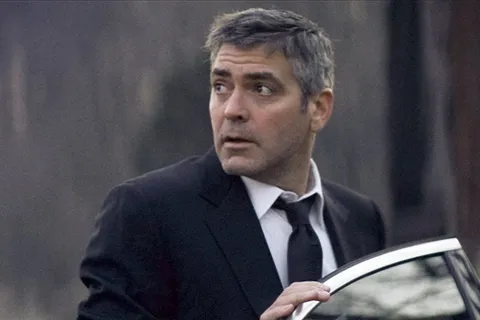
John Malkovich is the beating heart behind ‘Wild Horse Nine’
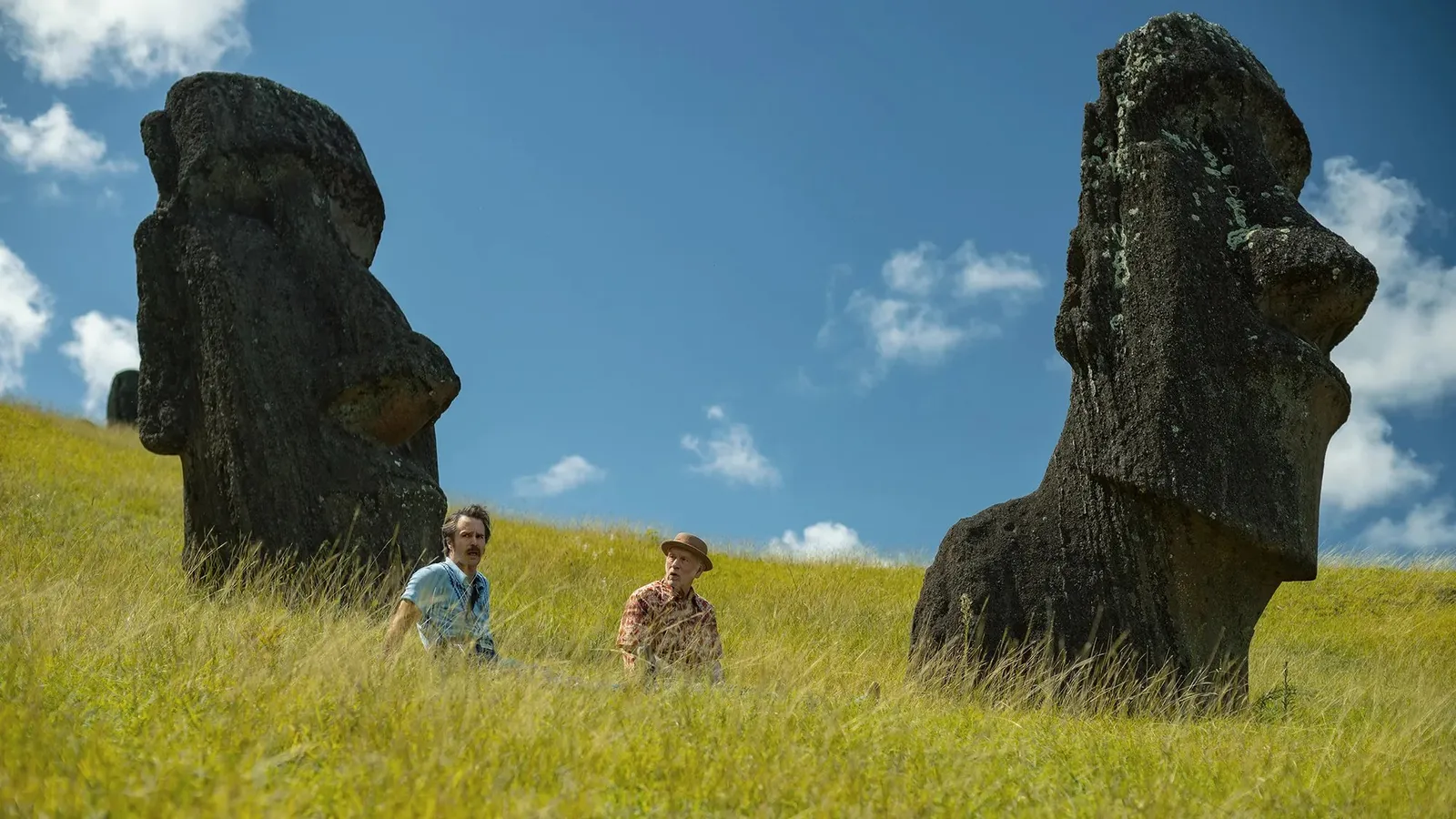
Two killers bicker their way across Easter Island as John Malkovich chews scenery in the role of a lifetime.
Much like his best work, Martin McDonagh’s new film Wild Horse Nine is, on its surface, about two killers bickering their way through a beautiful purgatory as they come to terms with what they’ve done and what they might still have to do to earn redemption. Still a playwright at heart, the director excels at extended sequences of ultra-profane comedic dialogue punctuated by the occasional violent rimshot. But unlike the generation of post-Tarantino, Guy Ritchie-adjacent music video directors that preceded him, there’s a beating heart behind McDonagh’s brick walls of masculinity. And those walls need to be broken down.
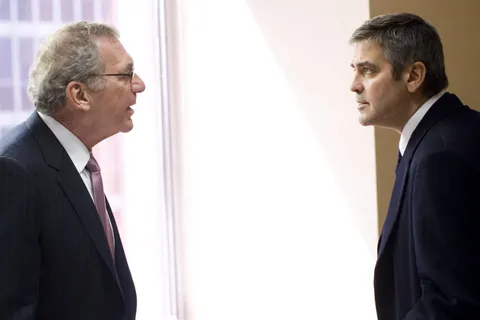
The wall in Wild Horse Nine is Chris (John Malkovich), a veteran CIA operative with a terminal cancer diagnosis. Chris and his partner Lee (Sam Rockwell) are headed to Easter Island, due for a break from destabilizing Salvador Allende’s government in the months before the 1973 coup. After running his mouth to two young women (Mariana Di Girólamo and Ailín Salas) at the airport, it becomes increasingly clear that Chris’s brain is misfiring in a way his rifles never did.
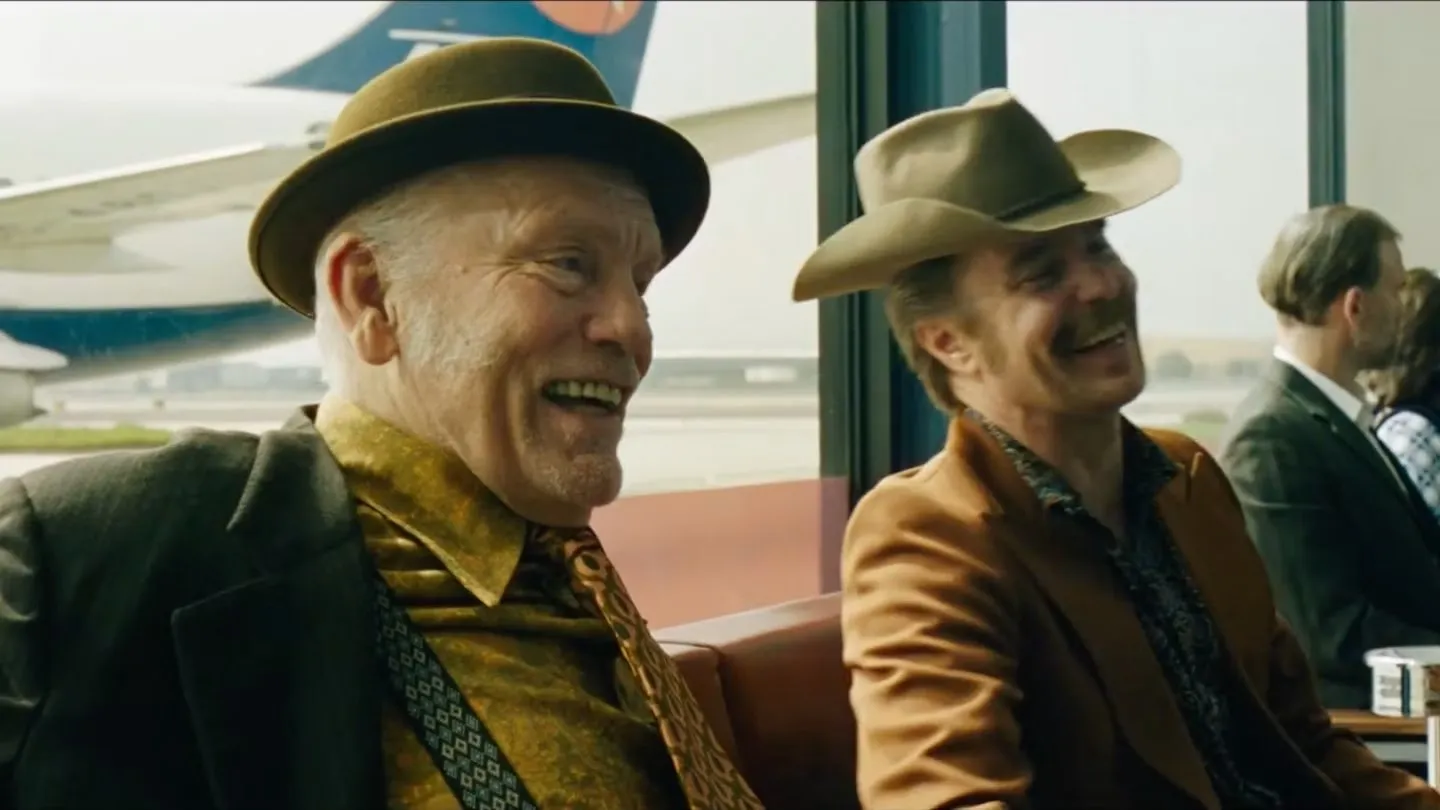
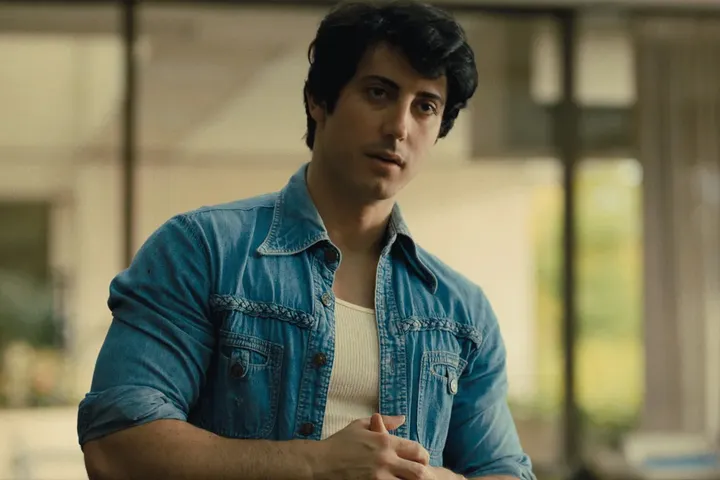
Chris and Lee, waiting on a plane, in Wild Horse Nine (2026)
It has to be said that McDonagh loves his character actors. Is it too much of a leap to imagine Sam Rockwell playing a shady, possibly scheming killer? Does Steve Buscemi show range as their pinstripe-suit-wearing boss? How about Tom Waits as a crusty brother with a grudge? No. But there’s something to be said for playing a piano perfectly in tune. The one key that rings a little flat is Parker Posey, as Lee’s wife Marge, playing a bit of a cartoon in the least developed role in the film. Even so, in between her mean-spirited banter with Rockwell, she manages to bring a warmth and softness the part doesn’t ask for. “Poor Chris, poor Lee,” she says at one point, and she says it in a truly mournful way.
You might be tempted to say the same of Malkovich, here playing another in a long line of grumpy, volatile, eccentric old men. But what the veteran actor brings to Chris that no one else could is a special kind of vulnerability. In between comedic monologues about why gayer countries have better cheese and ponderous musings on whether there are any Nazis in heaven, Malkovich lets an uncertainty show through, a fear of death barely hidden behind the veneer of stubbornness. It’s a role he was born to play, and he chews every last scene. Rockwell, sitting across from all of it, does a lot with his face. Some of his reactions to Malkovich’s increasingly unhinged dialogue are priceless, and they drew some of the biggest laughs at my screening at TIFF.
Cinematographer Ben Davis works in a ’70s color palette that echoes the slightly more saturated home movie Lee is shooting to document their journey, the footage that bookends Wild Horse Nine. He shoots Easter Island like a western, its lush green hills standing in for an unforgiving desert.
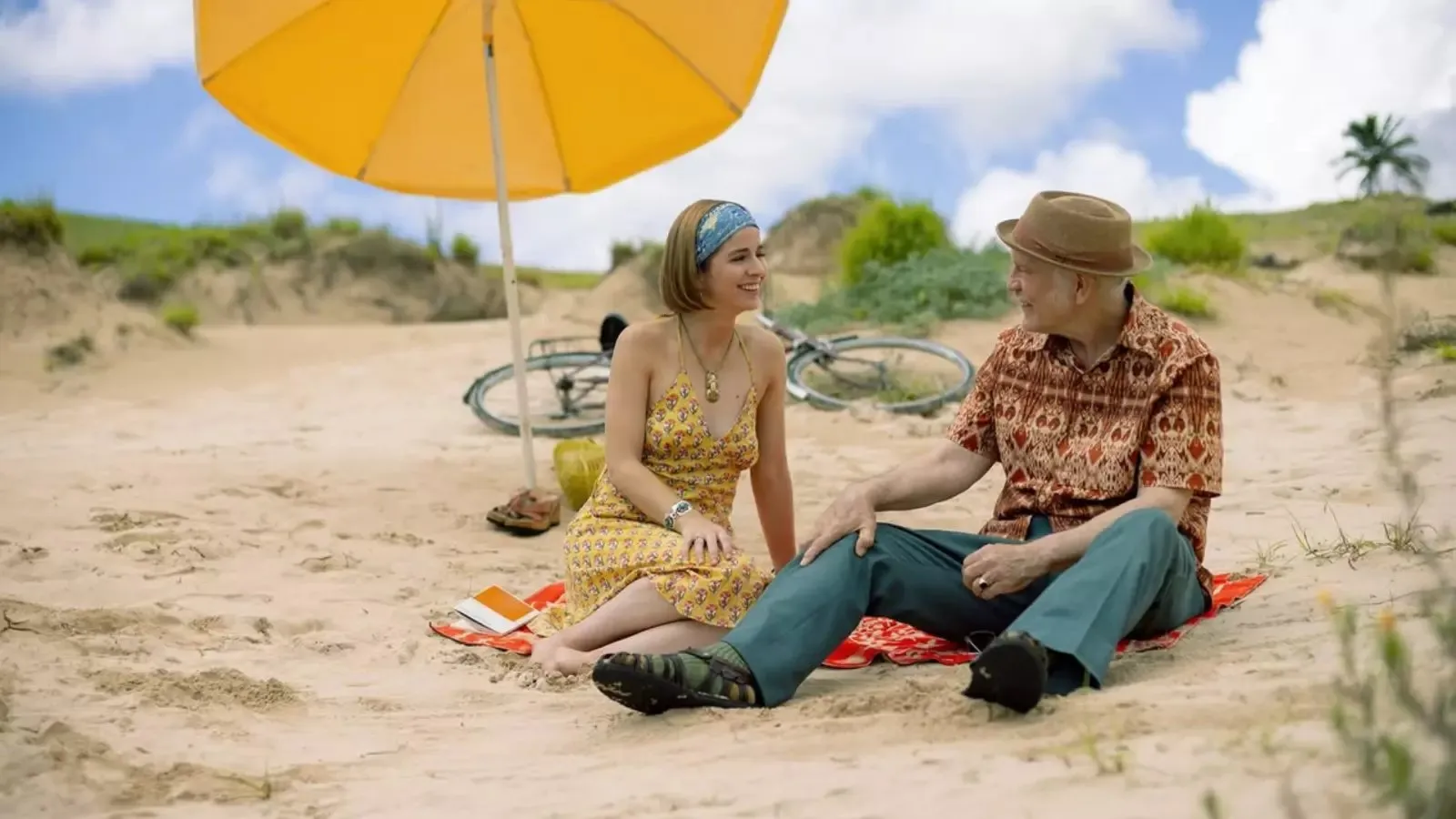
Chris finds someone worth talking to, in Wild Horse Nine (2026)
The women from the airport don’t disappear, either. Chris’s conversations with Monica (Di Girólamo) are the most memorable and thoughtful stretches of the film. He sees something in her, a way to try to fix what’s about to happen, or to salvage something from what might be his responsibility. Where that leads is bound up with the twists and turns of the back half, which shouldn’t be spoiled, except to say that Chris turns out to be responsible for one of the greatest conspiracy theories in American history.
But the soul of Wild Horse Nine comes down to Chris and Lee. A running theme throughout McDonagh’s work is people (mostly men, outside of a stray Frances McDormand) with cold, dead hearts struggling to find compassion for their targets, their friends, their neighbors, for strangers. Wild Horse Nine is about trying to find compassion for yourself. Chris and Lee are two sides of the same killer, and the film’s real subject is how you live with death, and whether it’s possible to make peace with yourself before it’s all gone.