‘Ink’ Doesn’t Practice What It Prints
Danny Boyle's Murdoch movie is a visually striking take on the beginning of the end of the news, with its own murky moral compass.
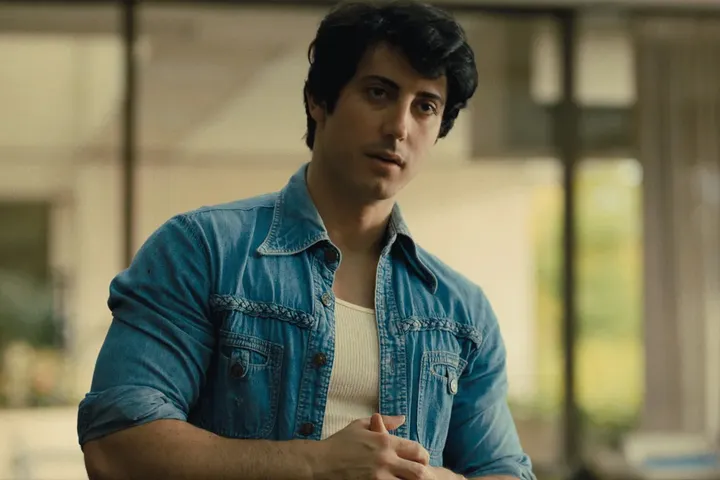
Again and again, Ink puts Rupert Murdoch (Guy Pearce) and Larry Lamb (Jack O’Connell) across from each other on the Tube, alone in the car. Each time we come back to them the lights flicker more intensely than they did before. It’s the film’s clearest image and its thesis: two men riding something they built toward a destination they can no longer see.
Ink is a film about the end. Of journalism, of polite society, of the line between entertainment and exploitation, between truth and commerce. It’s about Murdoch and Lamb, the editor he hired to run The Sun in 1969, losing control of their creation. And in a way nobody involved could have intended, it’s also a film about a director losing control of his.
At the Venice press conference on opening night, Boyle warned that the danger of the tech giants and their AI is that they will replace journalism with something cheaper and more efficient, and asked whether an AI journalist would ever “speak truth to the power that created it.” Three days later at Telluride, asked about the generative AI in his own movie, he told Vanity Fair that “there’s about 30 seconds of it”, used to animate a couple of old photographs (Margaret Thatcher among them) and to conjure some mice in the newsroom. “My opinion of it is that it’s a very useful tool in many ways, provided you use it respectfully and provided you pay actors if you’re going to replace them with some kind of AI embodiment,” he said, and framed it as part of the VFX toolbox, no different from any animation job.
By the time the film reached the Princess of Wales Theatre in Toronto, the question had followed him. At the TIFF screening I attended, someone in the balcony asked about the AI, and Boyle ran the same defense: a tiny amount, linked with VFX, no actors out of work. The wider question, he said, was “huge and complicated” and not one for the room. Somebody in the crowd disagreed. “Never do that shit again,” a voice shouted, and the moderator ended the Q&A shortly after.
I should admit, as a relatively uncultured American, that my exposure to Margaret Thatcher runs about as deep as history books and Meryl Streep in The Iron Lady. I would not have noticed the AI had I not walked in knowing about it. But the fact that it was used is incredibly frustrating, and not because of how it was used. Boyle’s account is probably accurate. It’s frustrating because it directly contradicts the message of the film it’s sitting inside. An unforced error, and one that highlights the shallowness of the whole endeavor.
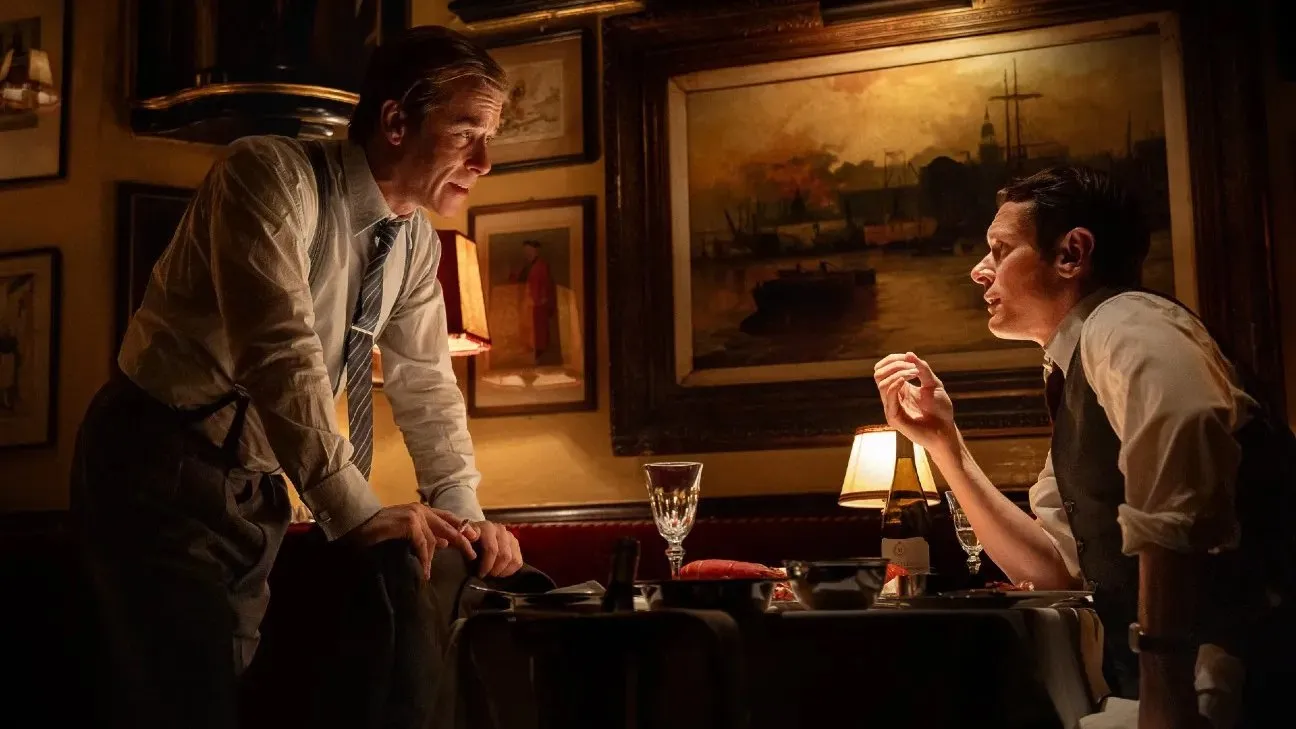
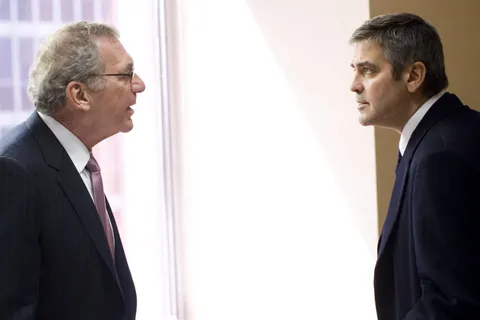
The pitch, over dinner, in Ink (2026)
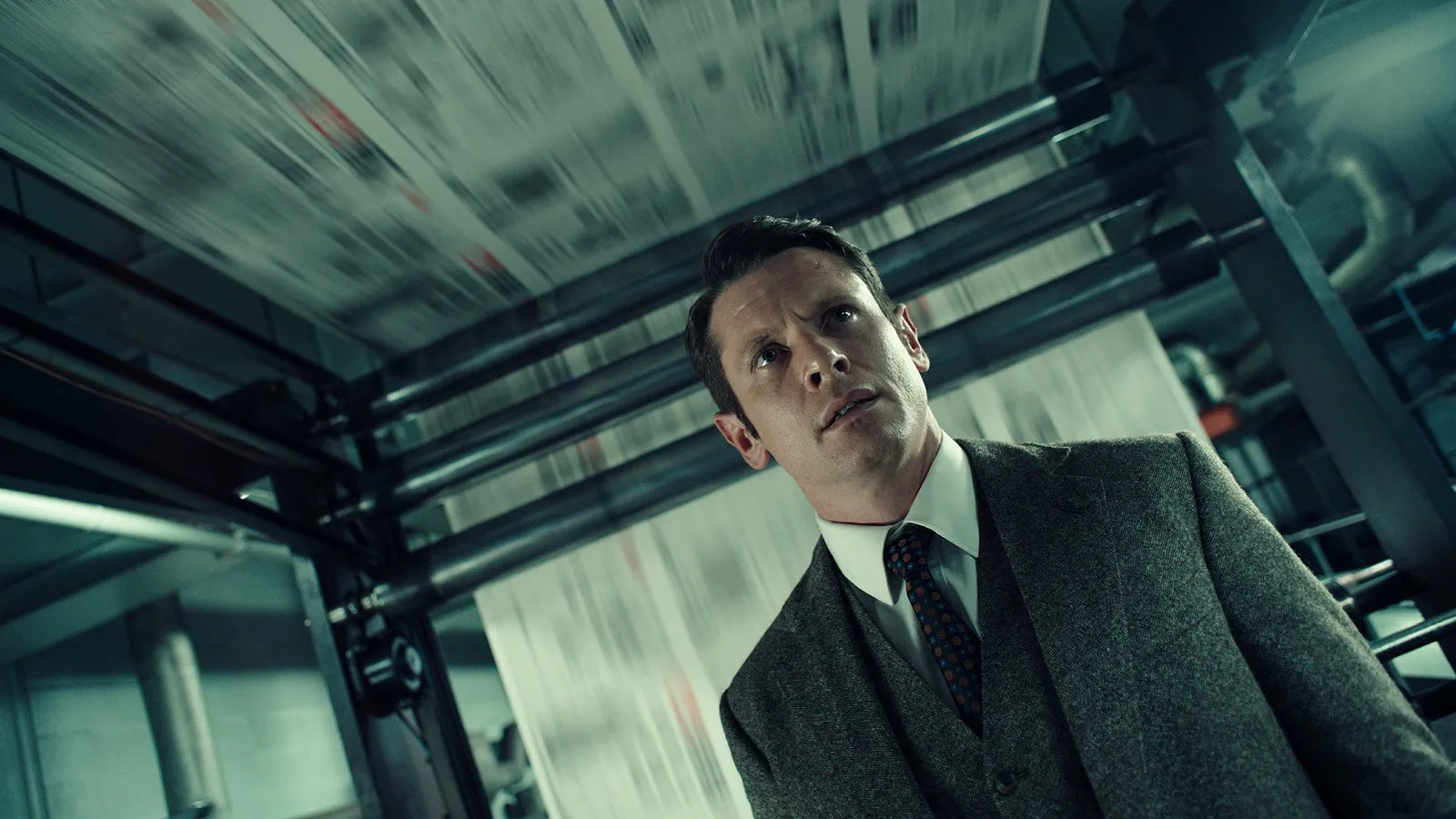
Which is a shame, because for its first hour Ink feels truly alive. Boyle’s cinematic acrobatics are on full display. The film begins like it’s been shot out of a cannon and the camera never stops moving. In the first meeting between Murdoch and Lamb, in a bar, it sways back and forth as if drunk at sea. When the two men lean down to listen to the printing presses beneath Fleet Street, the frame vibrates with the mechanical crunch of the machinery. At a press awards dinner, a speaker makes a particularly mean-spirited crack about Lamb, and the fat hands of the elite bang on the tables until the image shakes and the wine glasses spill over. When the newly hired staff of The Sun brainstorm what they want in their paper, Boyle stages it as a family settling onto a couch in front of the television, one by one. Every idea in the movie arrives as a physical sensation first. It’s visceral, riveting stuff.
Boyle and cinematographer Alwin H. Küchler carry over the “poor man’s bullet time” iPhone rig from 28 Years Later, deployed here in a completely unnecessary but nonetheless interesting effect. For a pivotal scene late in the film they also bring in Insta360 cameras, which Boyle described in the TIFF Q&A as the ones you see in skateboarding videos. It tracks. This is a director who would rather strap a camera to something than put it on a tripod.
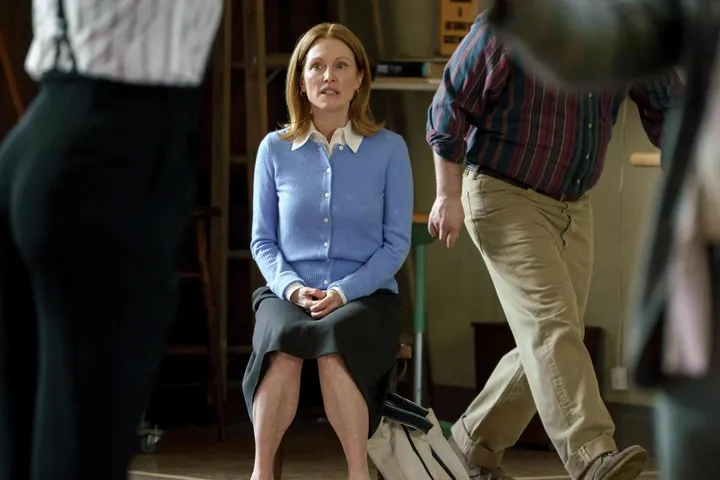
O’Connell continues to excel at playing monsters, from his vampiric turn in Sinners to the real enemy of 28 Years Later: The Bone Temple. He does not have a setting lower than 11, which makes him a good fit for the material. Guy Pearce lends Murdoch some necessary nuance and restraint. Claire Foy dutifully plays the Only Woman in the Building and isn’t given nearly enough agency, which in fairness is probably close to the reality of a 1969 newsroom. You can also argue that James Graham’s script, adapted from his own play, is a little too kind to the man responsible for the deterioration of modern media. I can’t imagine a late-film conversation between Lamb and a 19-year-old model going as unproblematically as it does here, in any decade.
That first blistering hour is a high-octane blast of energy. Then the film slows down considerably and tries to ramp up the dramatic tension, moving from Wolf of Wall Street anarchy into a more constrained thriller. It doesn’t always work. Boyle is a director who works best with a foot firmly on the gas pedal, and so does this film. The central idea holds throughout, of course: capitalism and ego ruined a once-proud institution and had irreversible effects on how we consume the news.
By the time we reach the conclusion and discover, via a montage of Andrew Tate and Fox News, what time has wrought, the damage has already been done. If only we could have known. If only we could have been warned about a dangerous future where people don’t trust the news. If only we could have prepared for a world where creativity and integrity get discarded so somebody can have a little more money. A world where our power grid and water supply are strained so the VFX team can animate some mice in the newsroom. But alas. The lights are flickering, and the train has already left the station.