
Sex in Movies Isn't Dying, It's Changing
Movies are having less sex. Are they less erotic? A take on what a sex scene is really for.
It appears that movies are suffering from a sexlessness epidemic.
It’s there, it’s in the data.
Since Gen Z is also in a “sex recession”, the discourse can quickly turn into the cringe insinuation that these young people are no fun.
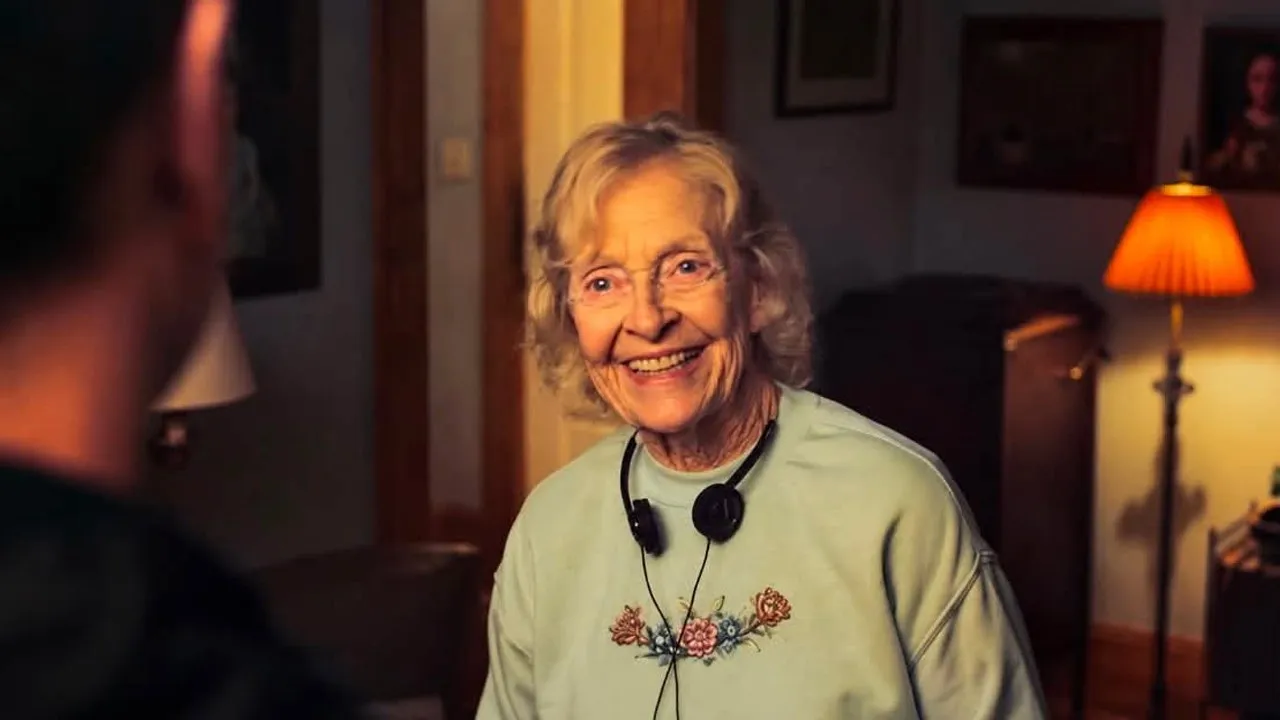
“I’ll teach those kids how to have REAL FUN”
Or even worse: it’s all the feminists’ fault. Ugly, sad killjoys.
The other day a co-worker told me her late millennial son is “afraid of flirting with girls” after #MeToo.
Maybe he should be.
Smug theories aside, some other facts are worth bringing up. First of all, the lack of sex is particularly true for the highest-grossing films. While some say it extends to larger samples of films, they don’t go into what that larger sample actually is and how far it goes. Because of industry changes, big movies are bigger, and so are the investments, so producers can’t afford to lose younger audiences. Apparently, streaming is absorbing that demand, especially through series. Smaller, more independent movies also don’t hesitate to show sex and nudity, and are going even further, sparking public discussions around consent, bringing alternative sexual practices into general awareness and giving more screen time to underrepresented populations. Maybe it’s not that bad that the highest-grossing movies are devoid of sex, because maybe it’s not actually sex per se that Gen Z rejects. Maybe they just don’t want the kind of normative, sexist sex that movies used to give us. Maybe right now is the moment to experiment around the representations we actually identify with.
So, there’s nothing to regret about #MeToo and the wake-up call it was. As a female spectator, sometimes I go back to movies made just twenty years ago and the sexual attraction scenes are unbearable to watch. (One gets used to being depicted as a human being.) Some movies just pull women - and minorities in general - out of them, making us self-conscious about our own bodies in our living rooms. Of course, male spectators feel it differently, and maybe that’s why we have such a gender gap in cinephile circles. I admire generations that are not willing to accept that.
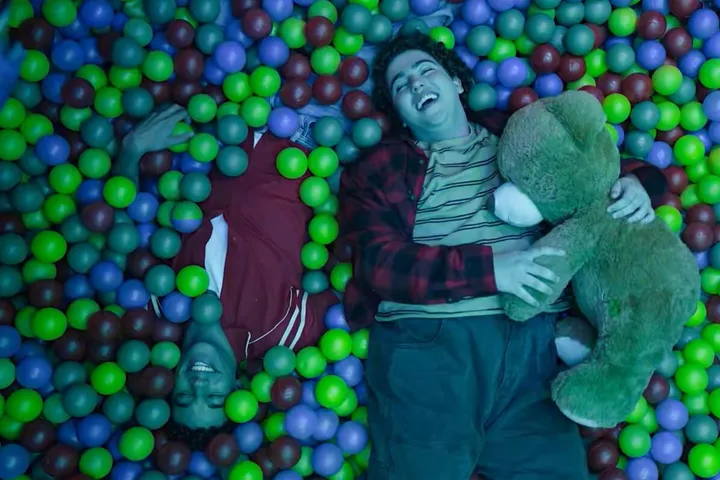
But what comes after rejecting what we don’t want? Is there a representation of sex we (will) identify with? Blockbusters are full of action figures and unerotic nerds like Christopher Nolan, and maybe that’s not so bad. Let them be, good for them. Among smaller films, even with less sex overall, the ones that do approach it have a more careful touch. We have awkward sex scenes that deromanticize intimacy, from the millennial classic Girls to the more recent series Normal People; we have LGBTQ+, BDSM, and even swinger lifestyles depicted very openly, with a great sense of humor, and crafted for public discussion (Pillion, I Want Your Sex, The Invite). Around us, tastemakers play along and tackle the debate. Maybe movies are helping us formulate our new position on sex from now on, after feminism’s fourth wave, against a masculinist backlash.
BUT!
As a woman with a baroque mind but a deep distaste for imprecisions, I felt the lack of terms to think further about these changes.
After a moment of introspection, here are some of the thoughts I managed to assemble:
Porn ≠ Horniness ≠ Eroticism
If one wants to attempt a definition, a pornographic image is an image of explicit sex. But, as Linda Williams wrote in her Hard Core: Power, Pleasure, and the “Frenzy of the Visible”, “one person’s pornography is another person’s erotica”. That is, it’s all very relative. The gray area is large. In which cases is nudity porn, for example? Apparently, the most used criterion for defining porn, since it changes so much according to culture, personal experience and historical period, is the one US Supreme Court Justice Potter Stewart gave for obscenity in 1964: “I know it when I see it”. Beyond the definition, to be honest, academic discussions about porn are not as exciting as I thought they would be. True pornographic material is very functional, and discussing it is like discussing the aesthetics of a tutorial video. The most interesting question I found is actually kind of marginal to the thing itself (but not useless to our question here). The same Linda Williams says that “the history of pornography is a history of power”, as in who has the power to make it, the power to see it, and the power to censor it.
A horny film - an extremely serious category - is, as I understand it, a film capable of causing arousal. An arousing film is not necessarily a film with sex in it. Honestly, I think almost anything is potentially arousing, since there are as many ways of desiring as there are people. Sexual awakening stories are a good example. A friend got his from an ad for Caprice des Dieux, a French cheese. Mine was the first sequence of The Mummy (Stephen Sommers, 1999). I know some girls got theirs from Disney’s foxy Robin Hood. Personally, I was not aroused the first time I saw a pornographic image (the image of an erect male penis): I was scared and disgusted by the obscenity - might I say the “externality” - of it. Ask yourself why you were aroused by your first sexual awakening images (or sounds, or stories), and you might come up with some interesting information about your horny mind.
The erotic is another subject. The erotic arouses too, but also existentially. While an explicit movie can be horny, in the erotic the libidinal creative energy matters much more than sexual arousal or stimulation. It’s about creatively exploring some sort of delicious tension. Sex can even ruin it, if it’s too direct. Gregg Araki recently approached the theme in an interesting scene in I Want Your Sex (2026), when a dominatrix sends her sub boy to another dominatrix, a French one, Yvette (!). The boy awkwardly gets on his knees, it’s too fast and too clumsy, and Yvette, in full-on French accent, scolds him for not being familiar with… eroticism. Oh, these Europeans!, the American dominatrix scoffs, and since every single one of Araki’s characters is a caricature, I don’t even know which side is being taken. Is it cultural, then? I want to say Americans are resistant to it, but Audre Lorde was already very American when she wrote her wonderful text Uses of the Erotic: The Erotic as Power. There, she goes as far as saying that “pornography is a direct denial of the power of the erotic”, because it “emphasizes sensation without feeling”. Careful: not feelings, feeling. Being present to pleasure, feeling it fully.
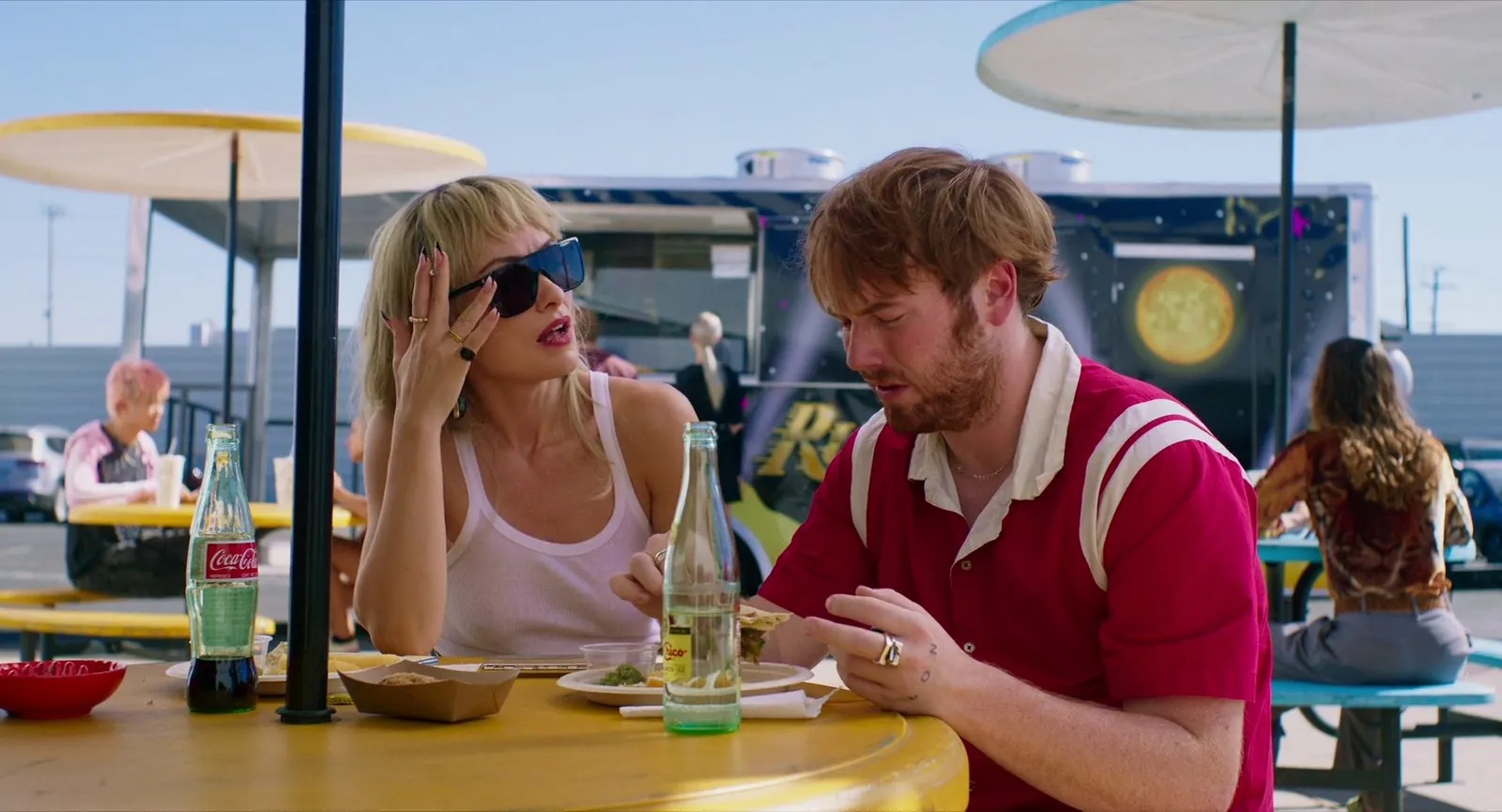
“Did she say sex is a dance? This is why I fucking hate Europe”
And there we enter slippery territory. I do feel like people socialized as women understand it better. Paradoxically, since we were taught from an early age to disconnect from our bodies, we hear more clearly the call to go back to it. Linda Williams, again: “for women, one constant of the history of sexuality has been a failure to imagine their pleasures outside a dominant male economy”. For many of us, it takes time to learn our “capacity for joy”, as Lorde says, and some never get there. She calls it “self-connection”, and it can manifest in many ways, from getting close to other bodies, to consuming art, to making things: “there is, for me, no difference between writing a good poem and moving into sunlight against the body of a woman I love”.
You know when a film touches you? When it reproduces an intimate, shapeless feeling you had without it ever passing through words? When it makes your senses hungry, and shifts your gaze as you walk out of the movie theater? That is an erotic movie.
For me, Leos Carax’s movies are extremely erotic.
Choose Me (Alan Rudolph, 1984) is erotic, more conventionally so. New Rose Hotel (Abel Ferrara, 1998), too.
Images are the arena of the pornographic, and sounds, of the erotic. Think of all the sounds in The Piano (Jane Campion, 1993). The eye wants control of the world, while the ear creates worlds of its own. Think of La niña santa (Lucrecia Martel, 2004). When Susan Sontag calls for replacing interpretation with “an erotics of art”, that’s what she means.
When a sex scene tells a story
I don’t want to make a value judgment here. Eroticism being more interesting as a concept doesn’t make it better. I also don’t agree that more explicit sex scenes play no role in the stories we love. What I get from people who support that idea is that sex is too intimate and narratively uninteresting, serving only perverts’ desire to look. But if anything in life can contain a story - even farting or dying - why would sex be different?
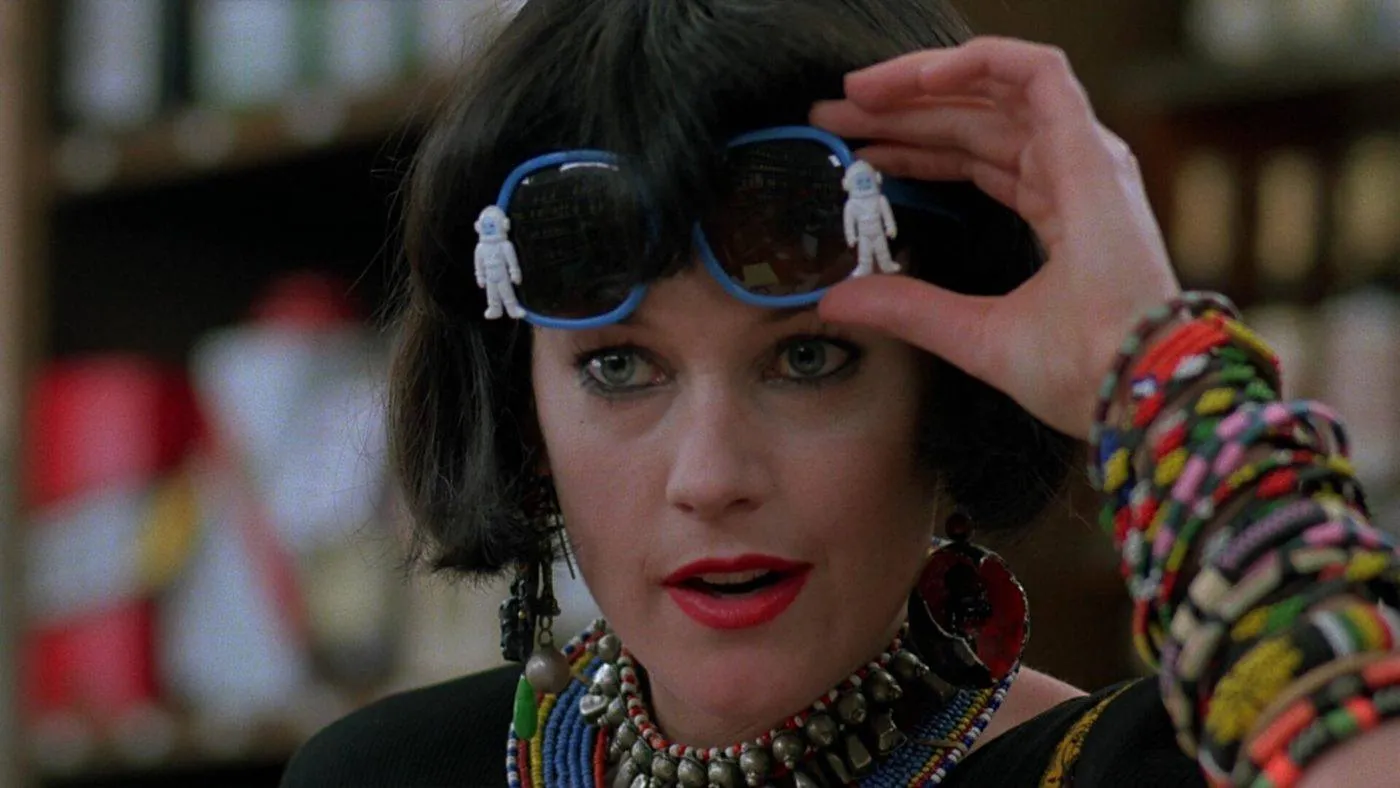
This point is better made with a couple of examples. Take Something Wild (Jonathan Demme, 1986). Lulu (Melanie Griffith), the manic pixie dream girl pioneer, soft-voiced and dangerously crazy, takes the yuppie normie Charlie (Jeff Daniels) as a casual victim. Right at the beginning of their encounter, they stop at a roadside motel to have sex. It is extremely funny. She throws him on the bed and starts untying his tie.
Then we have this two-liner, starting with Charlie:
- I just want you to know that I’ve never done anything like this before.
- Don’t worry, Charlie, I have.
As they are taking their clothes off, Charlie says he’s not going to take off his shirt because “he doesn’t feel quite comfortable yet”. She takes her dress off, licks her lips as if she was looking at a plate of lasagna, and puts some absurd reggae on this cassette player:
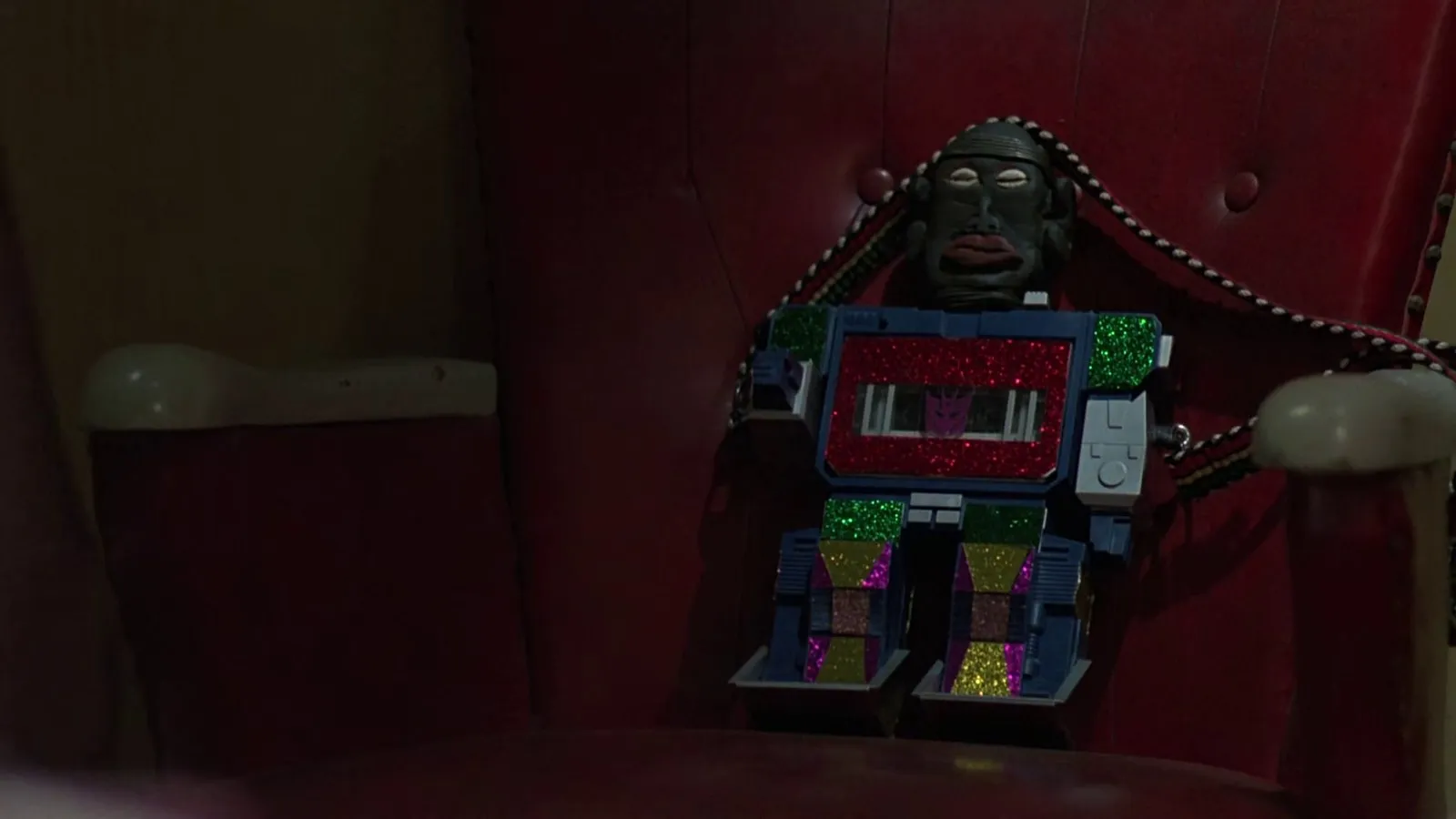
“Uh! Ah!”
She starts taking objects out of her purse. The first one, I don’t even know what it is. Then a rattle (she shakes it and half-sings “Charlie”). Then a pair of handcuffs. She cuffs him to the bed, tears his T-shirt, then her own. Because the female character is acting and not being acted upon, her half-nudity is weirdly natural, not male-gazey. There is lipstick all over their faces. She makes a joke about how aroused he is. Then she turns her back, picks up the phone and calls his office, while he is still cuffed.
It goes on and on, but I’ll stop here.
Demme is not reinventing the wheel here. He’s using a sex scene to speak about power and control of one character over another. But it is not a BDSM movie, it’s not meant to teach anything, it’s just the power dynamics between two people, the way it happens, delicate as it is, changing as it is. It has an important dramatic moment, as it establishes that Charlie is vulnerable and has something to lose; it also tells us how unapologetic (and violent) Lulu is about her desire.
There are very human topics to be explored through sex, such as the consolidation or reversal of power, the conflict between what we want and what we think we want, the danger and the welcoming of the Other. All of these are questions that go way beyond sex, but for which sex scenes can be a platform, a channel to say things less directly, as good cinema usually does.
Of course, when it’s not telling a story, it’s boring and worth cutting. I’ve read somewhere that the advent of intimacy coordinators got a lot of sex scenes cut for the simple reason that they ask why the scene is actually there in the script. But that’s also true for a walking scene or a scene of someone eating a corn dog.
Understanding what a sex scene is trying to say
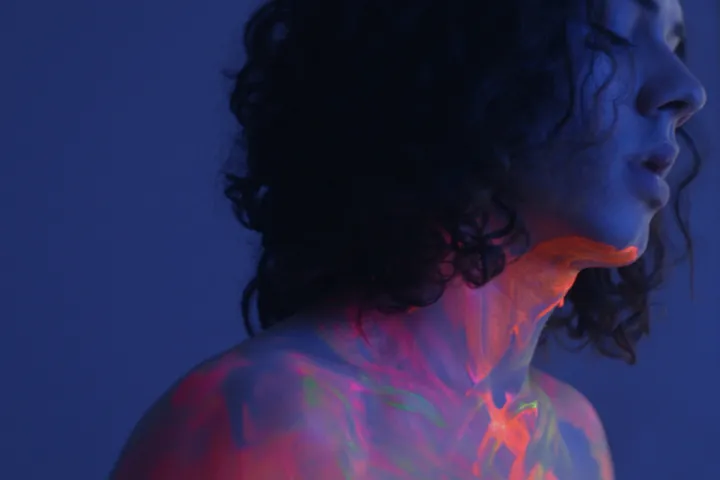
To be honest, I don’t think actual porn can tell stories. As I said, it’s a functional genre. I do have one exception to the rule, though: Las hijas del fuego (Albertina Carri, 2018). At once explosive, natural and unpretentious, it follows a group of friends having lesbian sex all over Argentina - including, of course, on the altar of a Catholic church. But from the start the movie presents itself as a questioning of the pornographic genre, as a provocation, which makes my point: when a porn scene tells a story, it is a subversion of the genre. Its very existence is a story to be told. In one of the last scenes, for example - if you don’t wanna be spoiled, just jump to the next paragraph - a silent observer walks through a sadomasochistic lesbian orgy filmed under the reddest gels, goes outside, puts her headphones on, closes her eyes, and masturbates for the camera in a very long uncut take. It is a scene that tells me something about this person and this situation: she enjoys being there; she doesn’t want to engage in the collective action, which suggests some avoidance of sexual contact; but she gladly shows herself to the camera, a gesture that is edgy and vulnerable at the same time. It is definitely a pornographic scene. Is it erotic? I’m not sure. Is it arousing? It can be, for some people. But overall, it is a good scene. It says something about a person that makes it feel real.
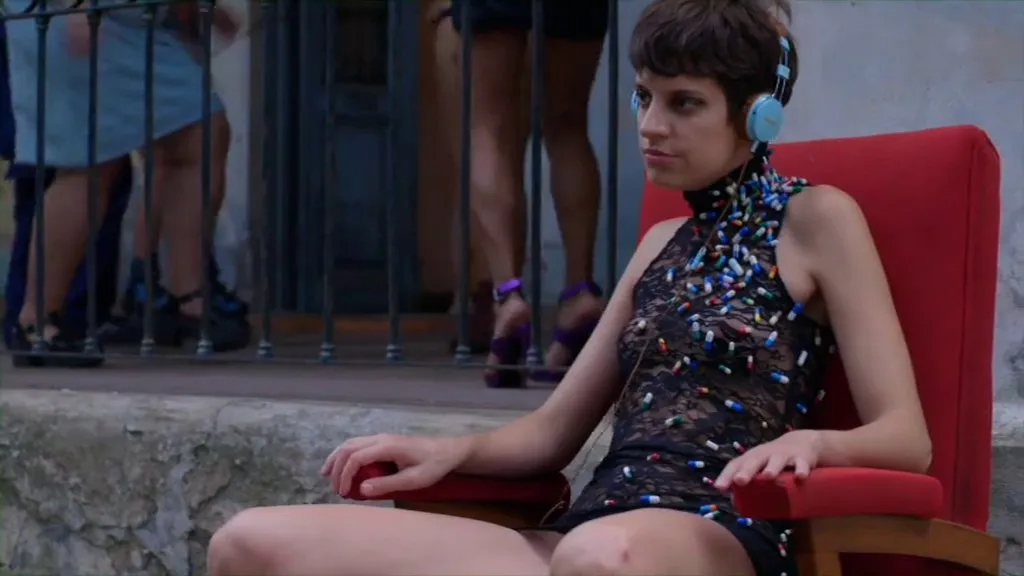
“She’s preparing.”
There are also stories as porn, as in audio erotica platforms for female audiences. I don’t want to fall into essentialism, but in Europe, one of the main apps in the genre has “Fem” in its name. Empirical evidence from the Catarina Institute of Houseparty Research shows that most people socialized as women enjoy audio and written erotica (and might occasionally watch a video or two), while people socialized as men prefer visual stimuli to get aroused (and will probably never read an erotic novella). But that is beyond our scope here; it’s just important to bear in mind that movies that show a lot might have a certain audience in mind, while movies that tell steamy things might be aiming for another. Carri’s movie is a subversion of that, too.
At the end of the day, how explicit or erotic a scene is matters less than its role in our understanding of something: either a plot point, or more diffuse information about a character, or the energy the director is trying to convey. Sometimes this energy is: sexism. Sometimes this energy is: cringe. But it’s important to know how to name your malaise as a spectator, because, obviously, your triggers say a lot about yourself. A sex scene can be infinitely uncomfortable and made to be that way. Or made to be funny, and then turn out not to be funny at all for a female spectator. But a critical spectator must be able to catch that feeling in their hands. Only then can they ask: “Why am I uncomfortable?”, or “Why is this director trying to make me uncomfortable with these two people having sex?”
That’s what film and media literacy is for.
I’ll leave you with our Naked Cinema Club list of horny movies and a simple routine of questions to ask yourself:
- Why does this scene exist?
- Does it make me horny or uncomfortable?
- Why does it make me horny/uncomfortable?
Have fun!

Had many lives, including screenwriter, cinema professor and goth teenager. Brazilian, drawn to intense movies, with low tolerance for biopics.