


The 7 Most Colorful Brazilian Queer Movies
Seven vibrant Brazilian queer movies for those who want to avoid stories centered on LGBTQ precarity, from erotic thrillers to silly coming-of-age tales.
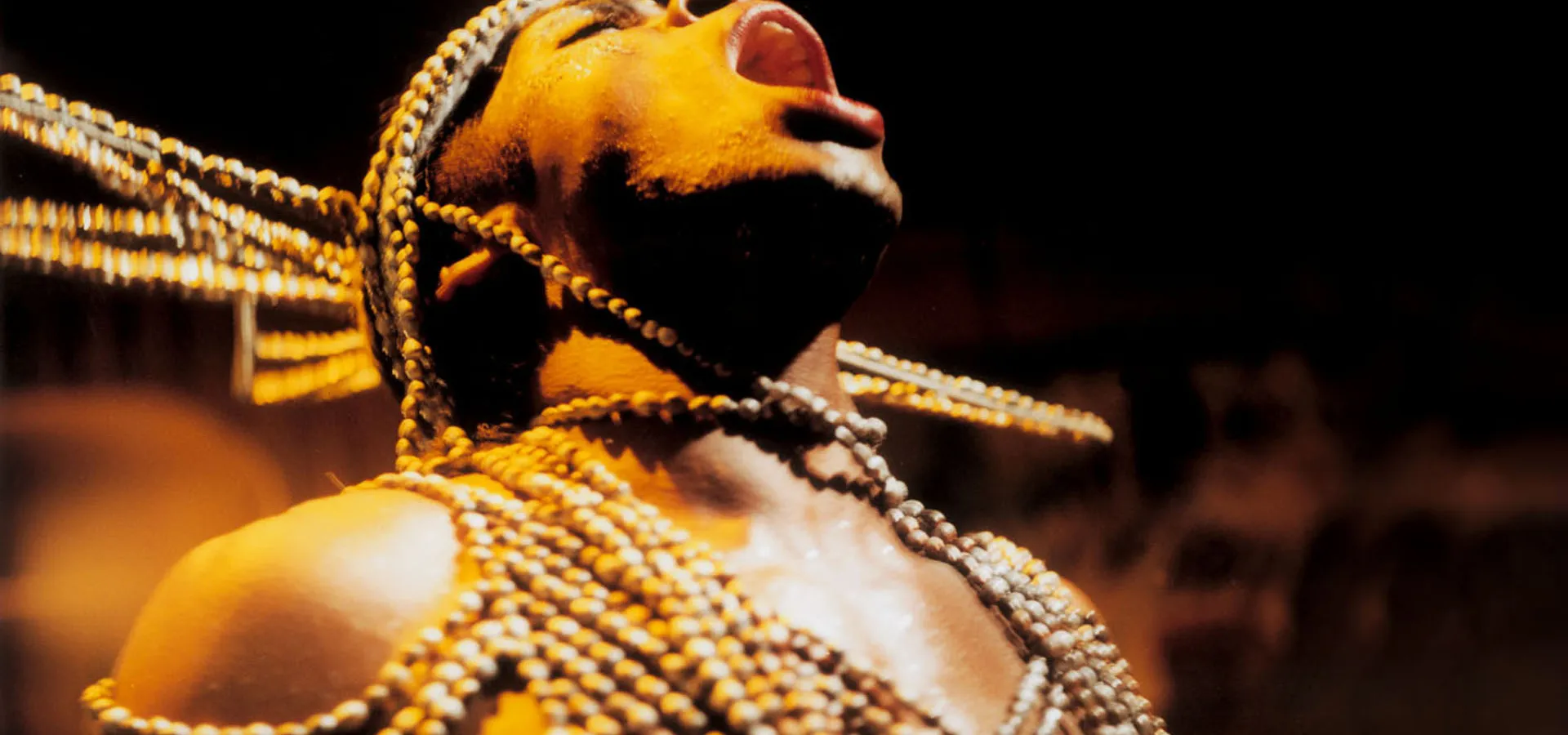
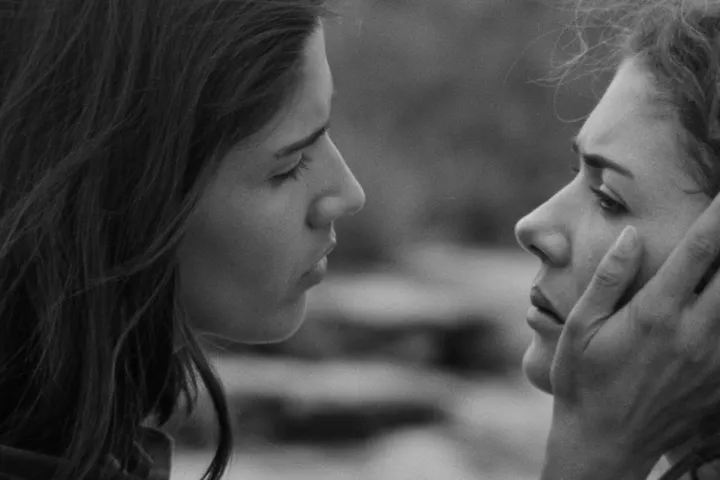
Two new Brazilian queer movies land this August. The Riverbank (A Margem do Rio, 2026), an erotic thriller/queer horror set in the mangroves of Recife, premiered at Locarno on August 11 and won the festival’s Special Jury Prize. Here the Whole Time (Quinze Dias) hit Netflix on August 19, a sweet, body-positive coming-of-age story adapted from Vitor Martins’ novel of the same name. To ride that wave, we pulled together a list of Brazilian queer films that you should know about. We aimed at contemporary, vibrant, colorful pictures, in the attempt to go beyond the well-worn narrative of LGBTQ precarity.
7. Alice Junior (2019, Gil Baroni)

Alice Junior (2019): pink, glitter, and a secret ideology bomb
I will die on the cross of the girly movie. They’re seen as a little dumb, as “bad”, precisely because they are made for us girlies, with pink, glitter and yay-based dialogue. But they need more critical attention paid to them, because they’re often secret ideology bombs (think about the difference between what Pretty Woman, Bridget Jones and Legally Blonde were trying to teach our girls). Movies teach us what to value and desire, forming our tastes and (romantic, sexual) aspirations. They also teach us how to desire. Somehow, it is refreshing to follow a teenager longing for a kiss in an era of either instant gratification, imperatives of jouissance, and/or instant dismissal. Yes, it is naif and slightly televisual. But who cares? It’s fun. Oh, and I almost forgot to mention: she’s trans.
The French father who accepts his daughter’s gender transition is a delicious cliché; the friends at school could have been better developed, though, and sometimes the political slogans fall heavy. I was kinda put off by the alcohol consumption, which is weirdly excessive for characters who are supposed to be in school (it’s illegal to drink before 18 in Brazil). Still worth a hungover watch.
6. The Way He Looks (Hoje eu quero voltar sozinho, 2014, Daniel Ribeiro)

The Way He Looks (2014): the whole film happens in small acts like this one
Daniel Ribeiro’s film, a feature-length version of his short Eu Não Quero Voltar Sozinho (I Don’t Want to Go Back Alone), has become one of the touchstones of Brazilian queer cinema. It belongs to the well-known overlap between LGBT film and the coming-of-age genre, though with one original twist: Leonardo, one of the leads amazingly played by Guilherme Lobo, is blind. It sounds like a stretch on paper, but the story is well written, told with tenderness and tact. A heartwarming favorite.
5. Hard Paint (Tinta Bruta, 2018, Filipe Matzembacher, Marcio Reolon)

Hard Paint (2018): neon as a symbol of the ephemeral
A “serious” film, Hard Paint is a character study built around Pedro (Shico Menegat), a young camboy on trial for a mysterious act of violence. At first, we only get his unsettling, potentially dangerous allure; the directors put us face to face with our own judgments. As the film evolves, though, it reveals itself as an exercise in empathy: slowly, we understand what triggered his outburst, we feel his social anxiety (thanks to the very competent work of mise-en-scène), and we start seeing the beauty the boy manages to create inside a world built on the basis of objectification. Extra points for how the young filmmaking duo makes us feel the alienation of online sex work through fragmented bodies and neon as a symbol of the ephemeral. Winner of the Teddy Award in Berlin.
4. Dry Wind (Vento Seco, 2020, Daniel Nolasco)
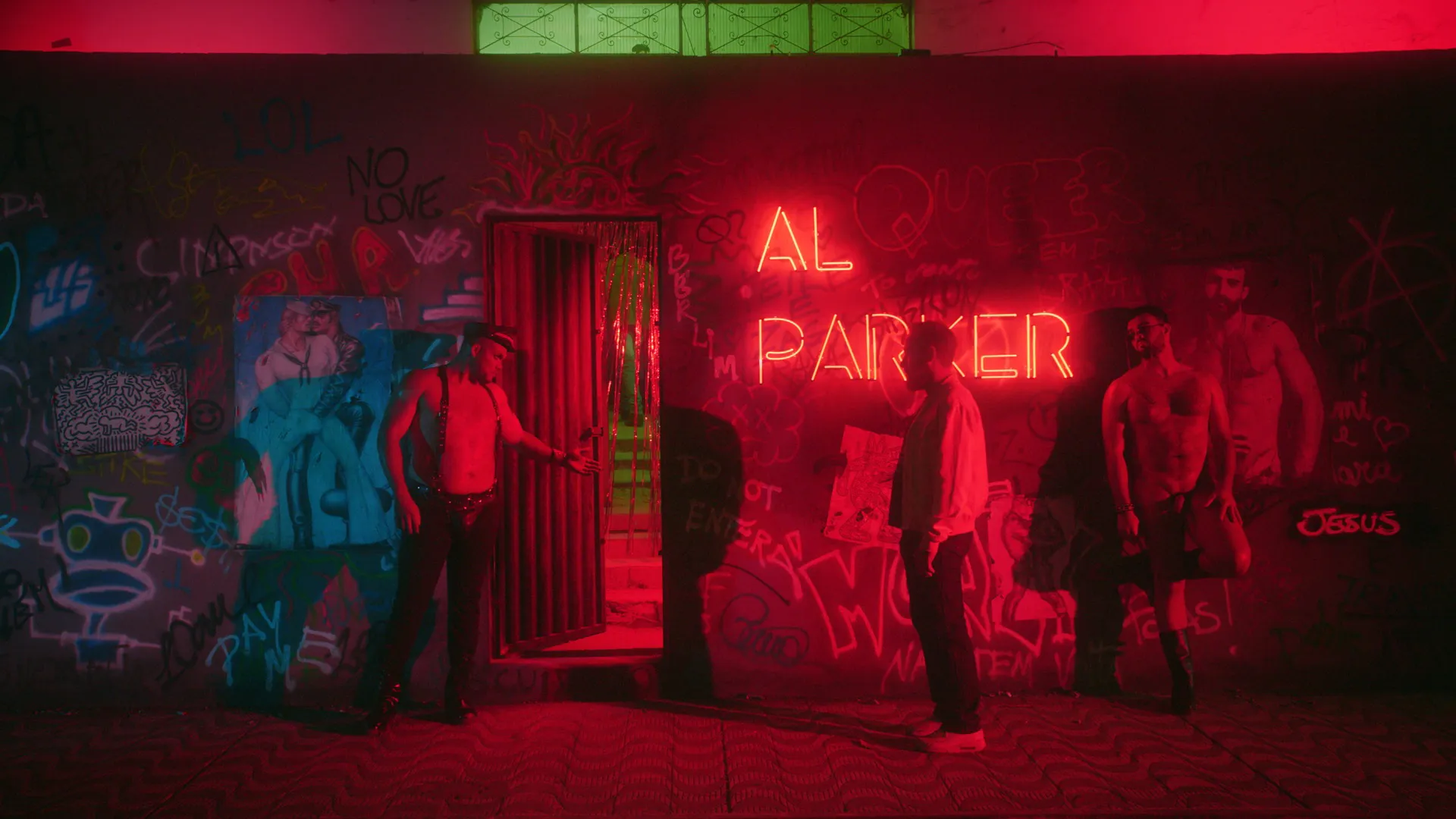
Dry Wind (2020): colors, oh so many colors
Dry Wind is a dreamy erotic thriller that has everything: horniness and tenderness; a cold war between lovers; a strong statement about gender violence and trauma; a charismatic trans union leader played by the amazing Renata Carvalho; and colors, oh so many colors. You need to feel it, sink into the end-of-the-world monotony of life that makes one think about the recent wave of contemporary suburban horror. Nothing happens inside the agribusiness factory, until it does. Horny points for the glances hiding love, sex, and violence.
3. Good Manners (As Boas Maneiras, 2017, Juliana Rojas e Marco Dutra)
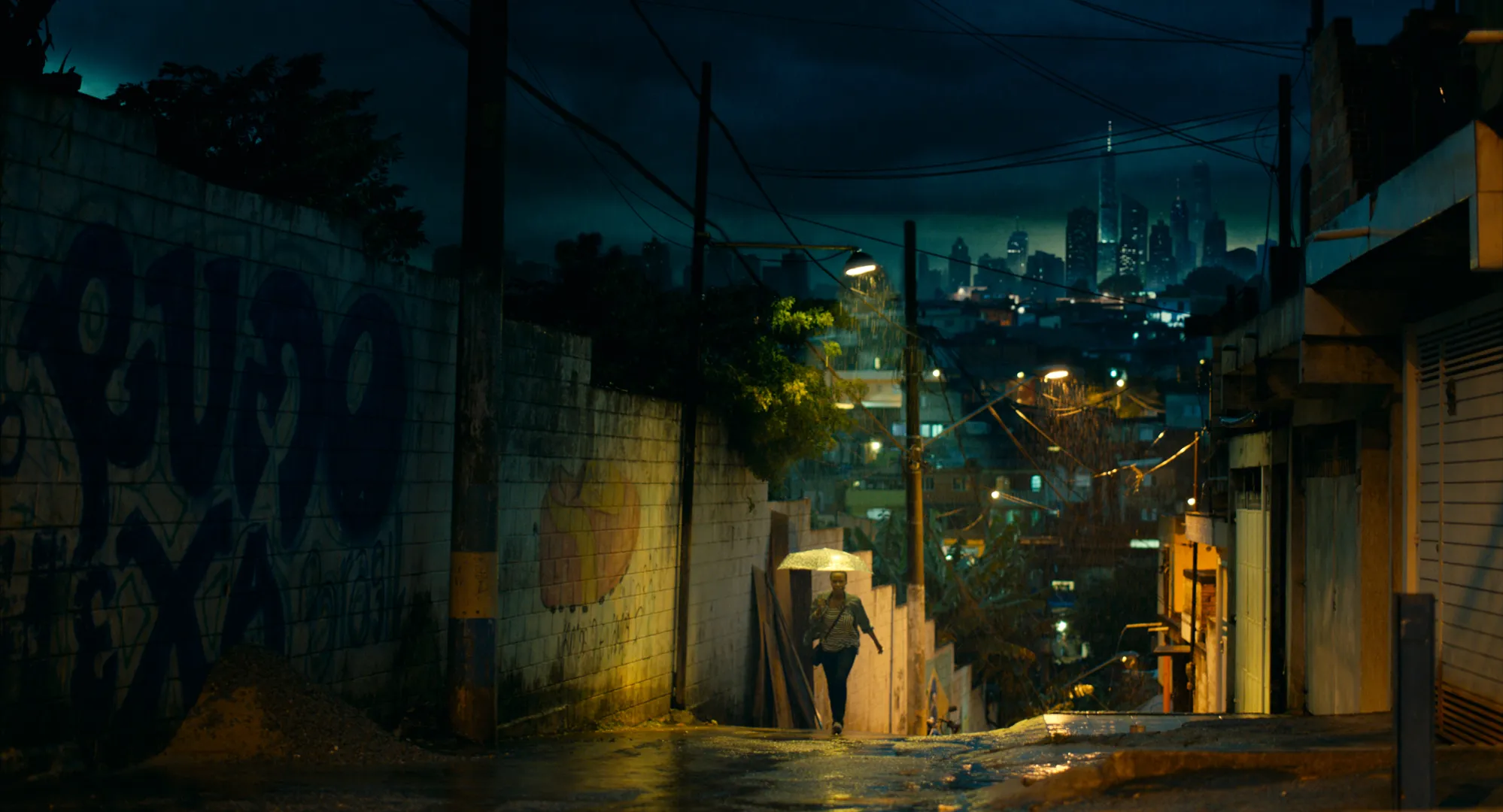
Good Manners (2017): the city roaring in the background of its residents’ lives
Good Manners is probably the best-known film from the duo Juliana Rojas and Marco Dutra, but the thread runs back to their first feature together, Hard Labor (Trabalhar Cansa, 2011), which premiered at Cannes and built its horror around the theme of labor relations. Since then, the two of them have developed a distinctive line, mixing musical and horror with sparkles of kitsch, always circling back to the way work and inequality shape our lives. It’s hard to say much about this film without spoiling it. Here’s just enough to pull you in: it’s a film about lesbians and werewolves that handles social questions, like single motherhood and domestic labor, with the same weight it gives the perennial question of queer cinema: the long road to finding a place you belong to. I’m biased, but I also love how Rojas and Dutra shoot São Paulo. Unlike Caetano’s realistic approach, for them the city falls in the fantastic realm, roaring in the background of its residents’ everyday lives.
2. Tattoo (Tatuagem, 2013, Hilton Lacerda)

Tattoo (2013): the troupe, mid-revel, with the dictatorship waiting outside
The colors and sounds of 1970s Brazil have never been more popular, thanks to the success of The Secret Agent (2025, Kleber Mendonça Filho) and I’m Still Here (2024, Walter Salles). Tatuagem (Tattoo, 2013, Hilton Lacerda), though, is still my favorite queer take on that strange moment of history where the currents of Brazil’s counterculture and its military dictatorship converged. The alternative life of the Companhia Chão de Estrelas troupe shows art’s power to liberate, in an era when authoritarianism always lurked behind the door. The dance and sex scene, where Fininha (Jesuíta Barbosa), a young soldier, sleeps with Clécio (Irandhir Santos), an experienced theater director, for the first time, is still one of the most intense I’ve seen on the movies. And the final performance is priceless: you’ll be humming inappropriate songs for at least a week.
1. Baby (2024, Marcelo Caetano)
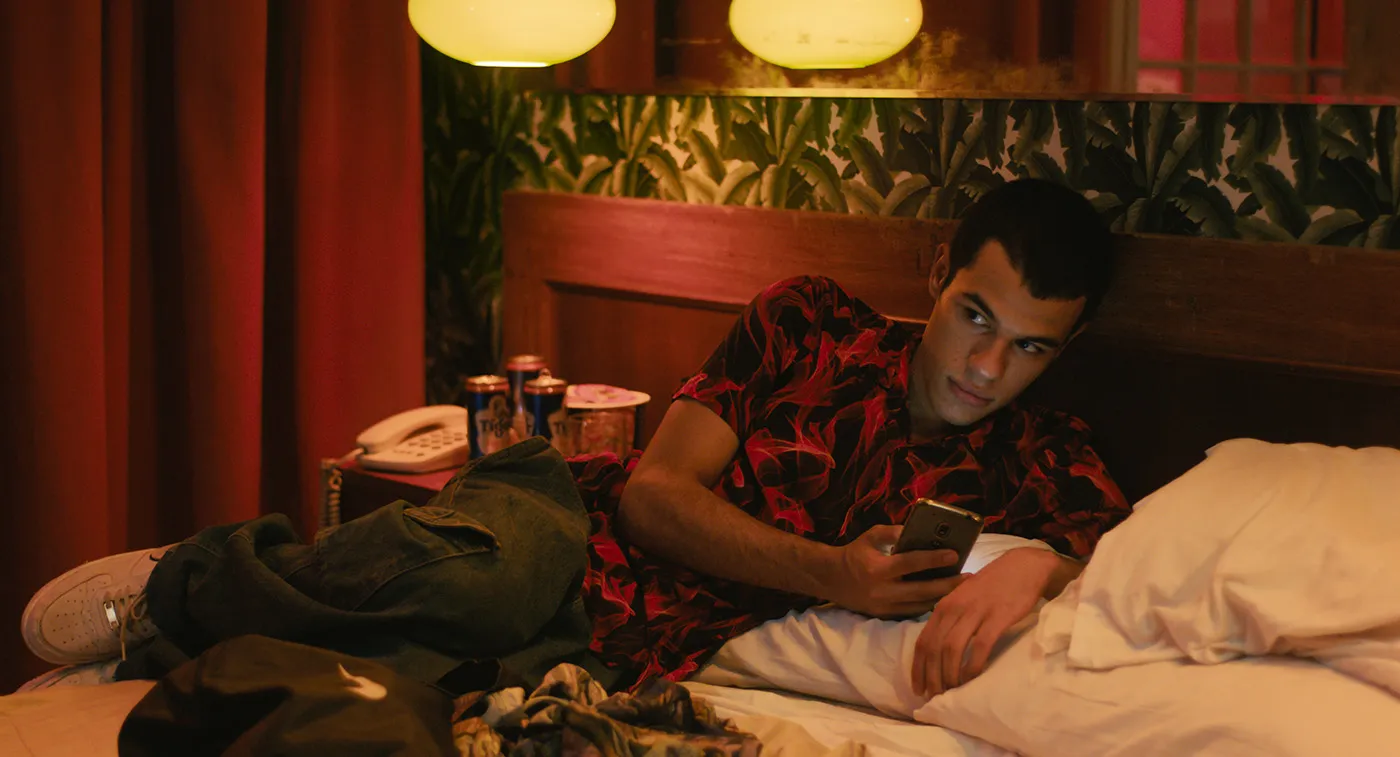
Baby (2024): São Paulo as the city that takes queer kids in
Baby (2024, Marcelo Caetano), which premiered in Cannes’ Critics’ Week, opens like it might tip into poverty porn: a young man fresh out of prison, drifting through the underbelly of the paulista metropolis. But as the film moves forward, Baby (João Pedro Mariano) builds friendships and love affairs, finds a chosen family, and creates, dances, laughs, and claims his own spaces. Baby is a love letter to São Paulo, the city that takes in so many queer kids fleeing Brazil’s conservative heartland. Marcelo Caetano films the concrete jungle with a gift from finding beauty where others wouldn’t look. A feel-good movie, but a daring one.
So keep an eye out for The Riverbank and Here the Whole Time, and hit us up on [social media] to tell us what you think.

Had many lives, including screenwriter, cinema professor and goth teenager. Brazilian, drawn to intense movies, with low tolerance for biopics.