
What is a kiss?
Filming a kiss means filming something every viewer believes they already understand. Glauber Rocha spent one silent minute proving otherwise.
On Black God, White Devil’s kiss
There are some things in life that we don’t quite know how to name, and cinema helps us understand them. Sometimes cinema (or art, in general) amplifies the range of meanings we used to associate with a word. Sometimes cinema has such a profound impact on the construction of a concept that we no longer know what comes from the film, and what comes from lived experience. If someone wants to know what is love, or what is intelligence, or what is to lose oneself, perhaps they should look at how it was filmed.
I was asking myself about something much more concrete than this, though: a kiss. How to film a kiss? I realized it is a particularly difficult thing to film, because filming it means filming what it means, not exactly what it is.
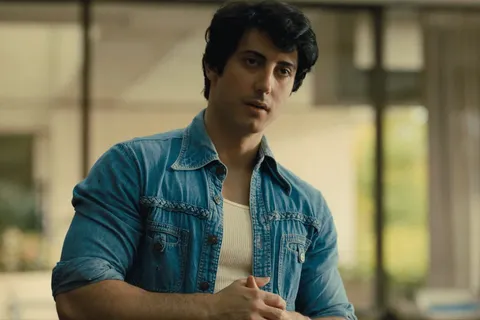
Years after seeing it, I still clearly remembered the kiss between Ryan Gosling and Carey Mulligan in Drive (2011, Nicolas Winding Refn). That is the classic kiss of doomed love, the “we will always have Paris” kiss, the too-late kiss. I remembered the slow motion, the dance of gestures, the lips that take their time to part, and the brutal violence that follows immediately after; the fear in her eyes, the resignation in his. More recently, Pillion (2026, Harry Lighton) earns its place in the gallery of great cinematic kisses because, unlike the tragic too-late kiss, this one is maybe a too-soon. (Note that great kisses are generally the only kiss in a film — is that a rule?). Colin (Harry Melling), fragile and vulnerable in appearance, was ready; Ray (Alexander Skarksgard), with all his stature and his beauty, was not. And once again, a kiss is not merely two lips touching: in this case, the magnificent look on Alexander Skarsgård’s face that follows (a look of sentimental vulnerability, of fear, of horror) is also part of that kiss.
My take here: sometimes we think we know what something is. Until we see it in a great film, and discover that we were wrong, that we don’t really know anything about the thing at all.
This came to mind when I revisited the kiss in Black God, White Devil, Glauber Rocha’s second feature, released in cinemas roughly two weeks before the military coup of April 1st, 1964. What is a kiss? In this case, the context that precedes it is already telling: the transgression of the matrimonial institution (conservative, bourgeoise) because this is a kiss between two married people, though not to each other, and the woman is wearing, provocatively, a wedding dress. In Rocha’s allegory, Rosa is preparing to carry the child of revolutionary violence (an image one might compare to Perfidia’s pregnancy in One Battle After Another).
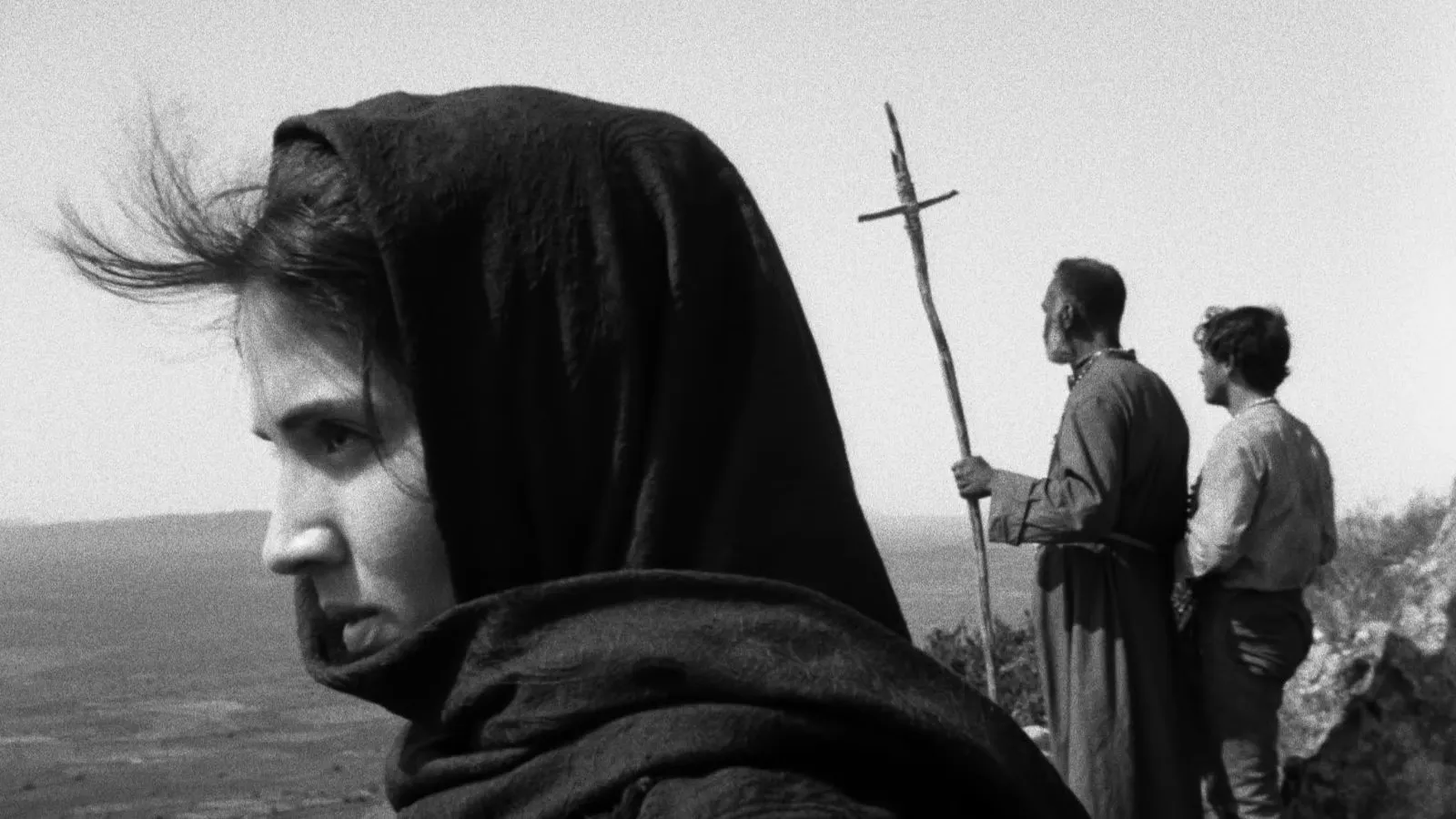
The sertão Rocha put the kiss inside, in Black God, White Devil (1964)
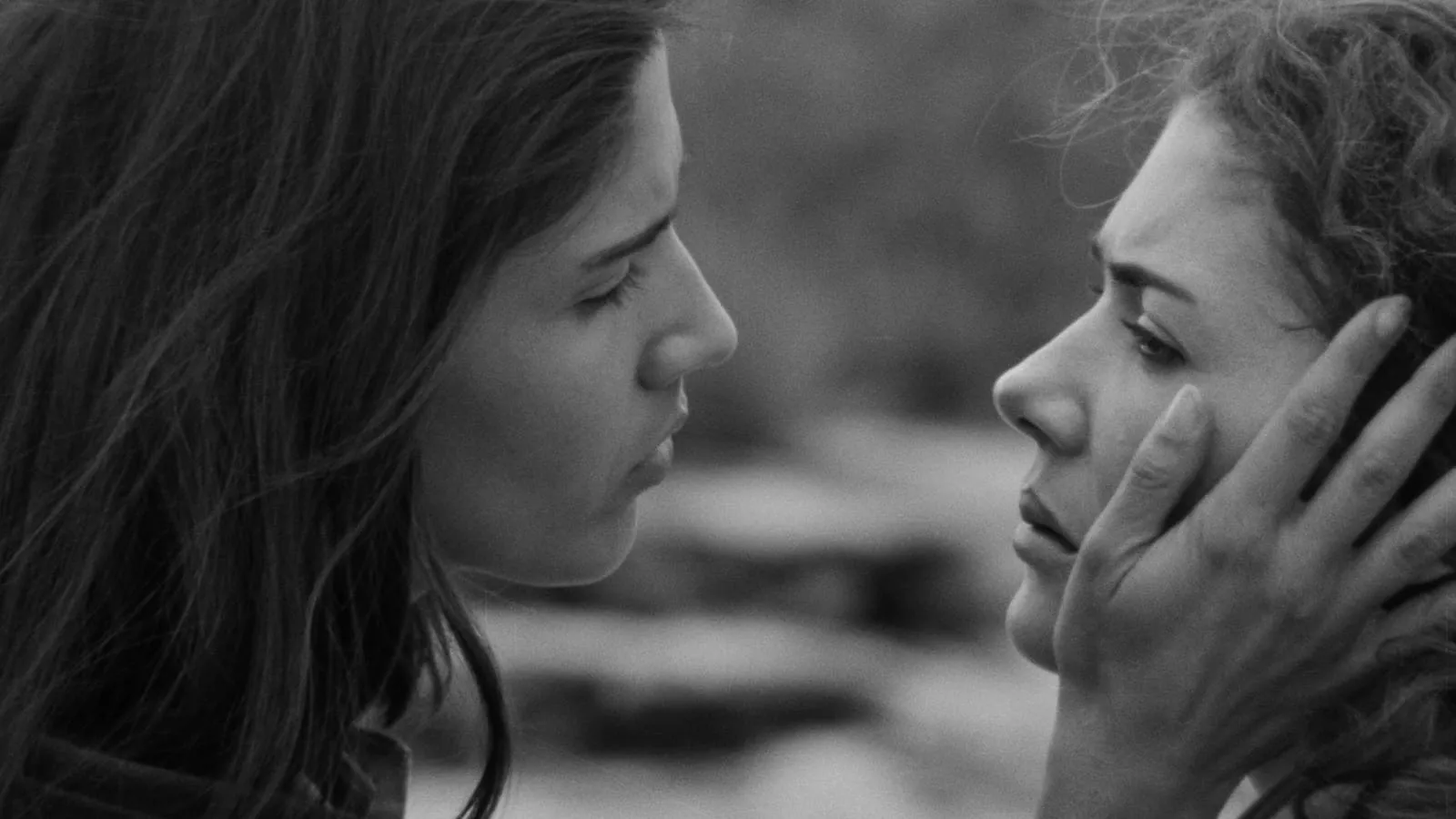
But let us look at the kiss itself: first, silence. Glauber Rocha is a filmmaker of sound and fury, so every silence in his films carries a strong purpose. The kiss begins before it begins: in this silence, in the glances, in Rosa (Yoná Magalhães) circling Corisco’s body (Othon Bastos), examining him, animalistically smelling his wild hair. Suddenly, a slight lateral pan reveals, with surprise, that Corisco’s rough, calloused hand already grips Rosa’s head. What an erotic pan: the surprise, the rough skin against the lace, the strength of passion disorganizing her delicate hair. Her eyes are closed, her mouth open. And when the faces first meet, the lips don’t come together in a proper kiss; it is skin rubbing hungrily against skin. An off-axis cut disorients us before the lips finally touch and Villa-Lobos begins to play. Then comes the scene that became one of the most famous in Brazilian cinema: the camera begins to circle around the couple, and from the mass formed by their two bodies we can see Rosa’s mouth, open, feral, turned toward the sky. The white lace shines like the coins on the cangaceiro’s hat; words are whispered; the camera trembles; their hair intertwines. This kiss is not a fusion, it keeps a tension between two parts that productively collide but, for the scene to be beautiful and for the revolution to be accomplished, cannot fully merge.
What is a kiss? Corisco’s hand on Rosa’s head is already a kiss. Rosa’s mouth open, turned toward the sky while the rest of her body collides with her lover’s, that’s a kiss. Before seeing this film, I would not have described a kiss quite like this.

Had many lives, including screenwriter, cinema professor and goth teenager. Brazilian, drawn to intense movies, with low tolerance for biopics.