
‘Teenage Sex and Death at Camp Miasma’ Bullies Us Back Into the Body
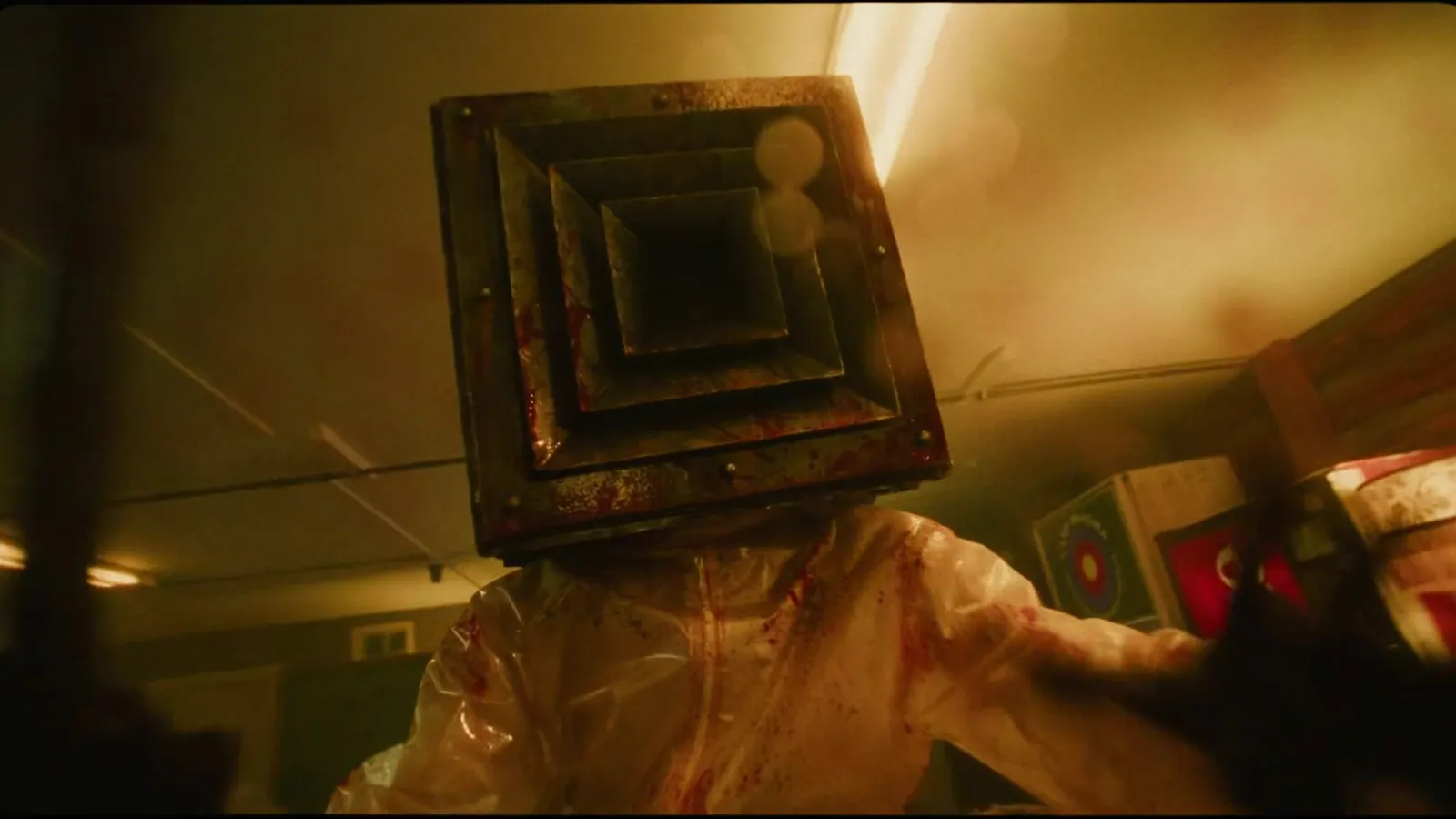
Jane Schoenbrun's meta-slasher takes the intellectuals who can't come by the hand and bullies us until we find the way out.
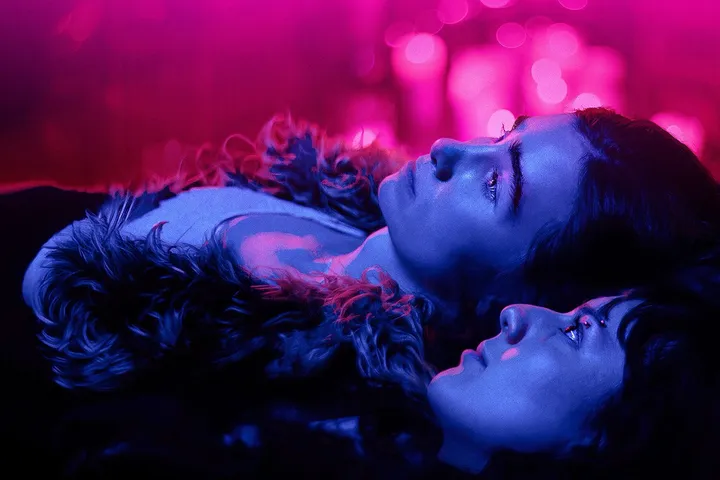
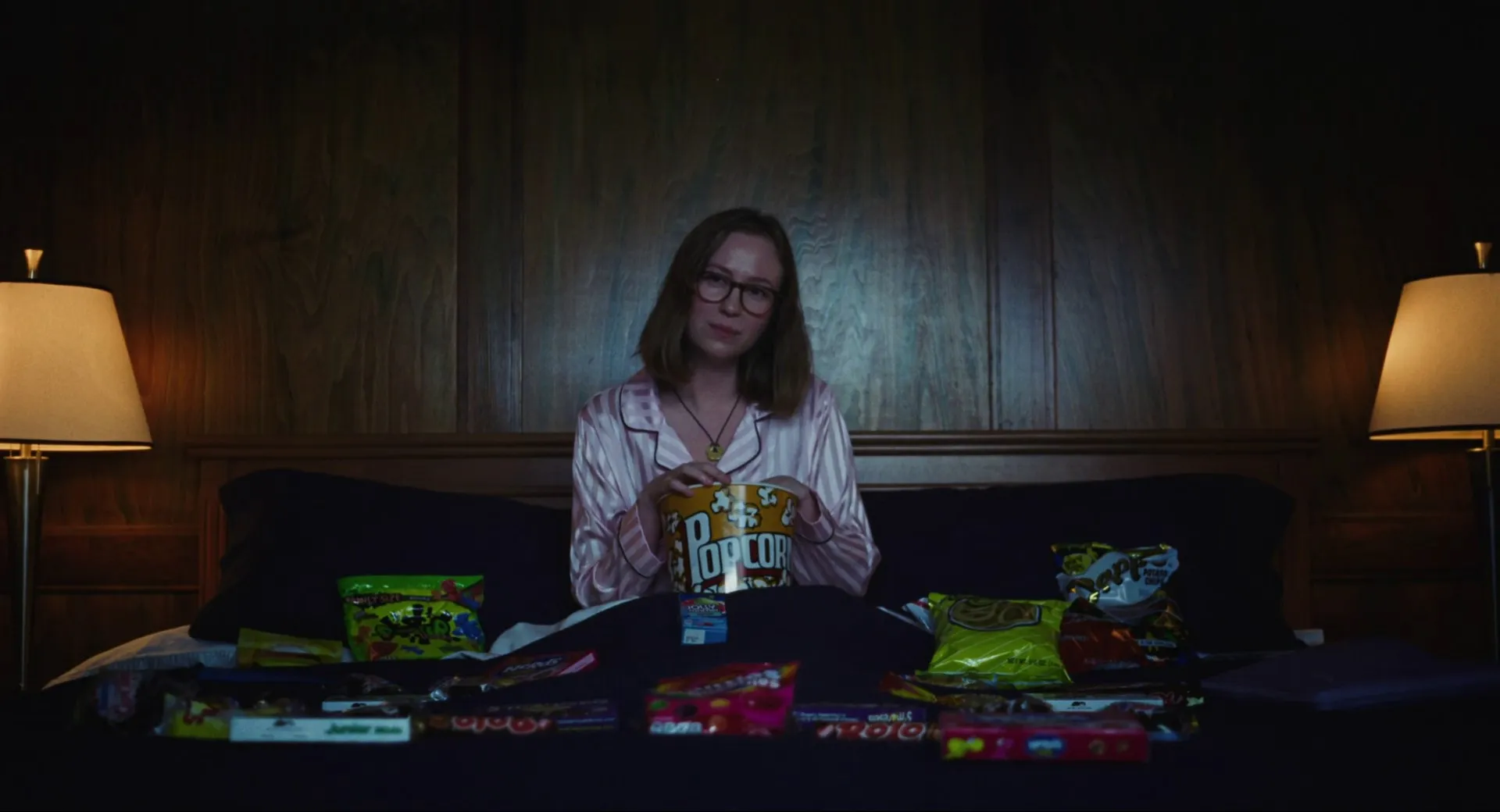
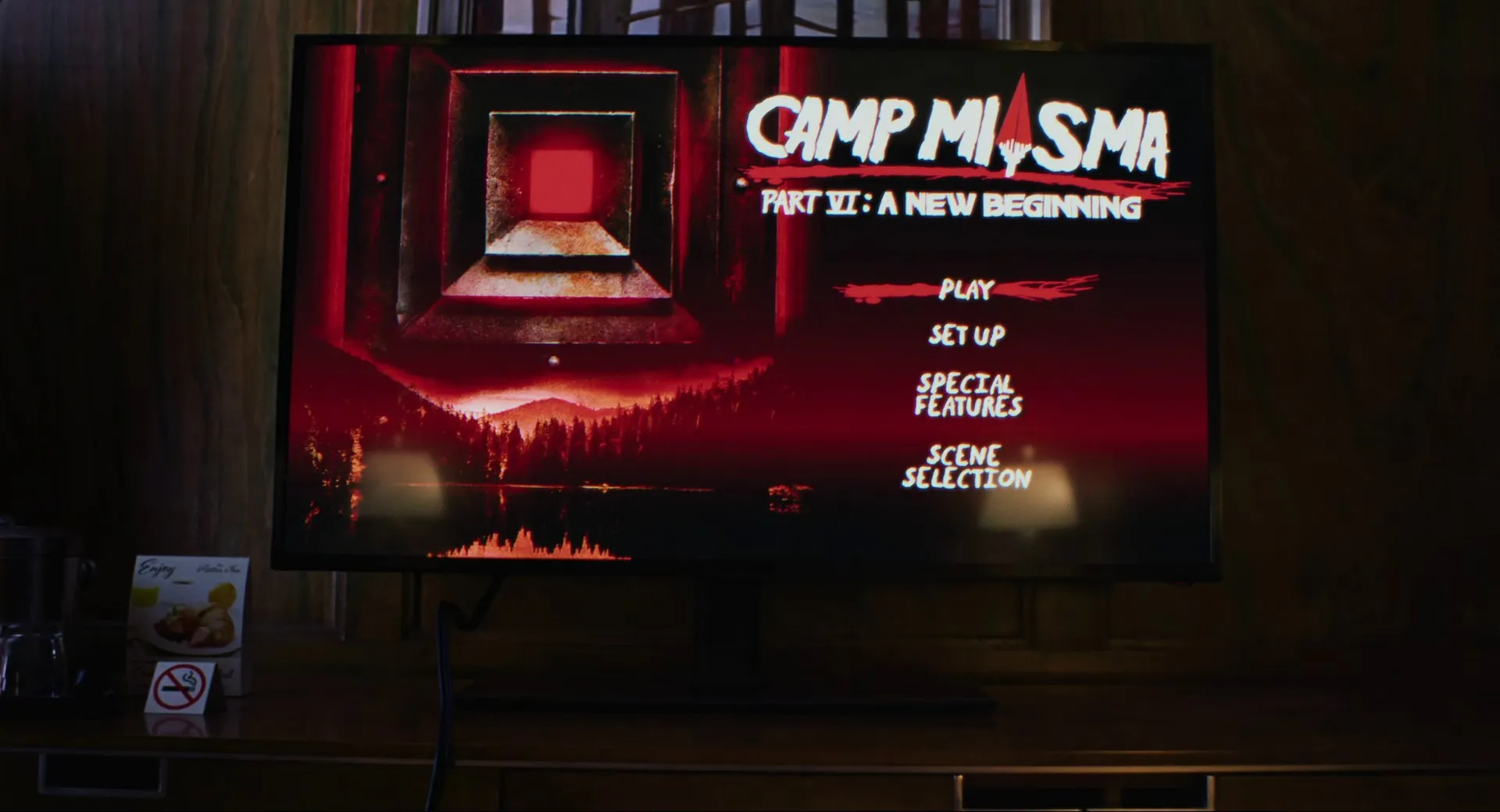
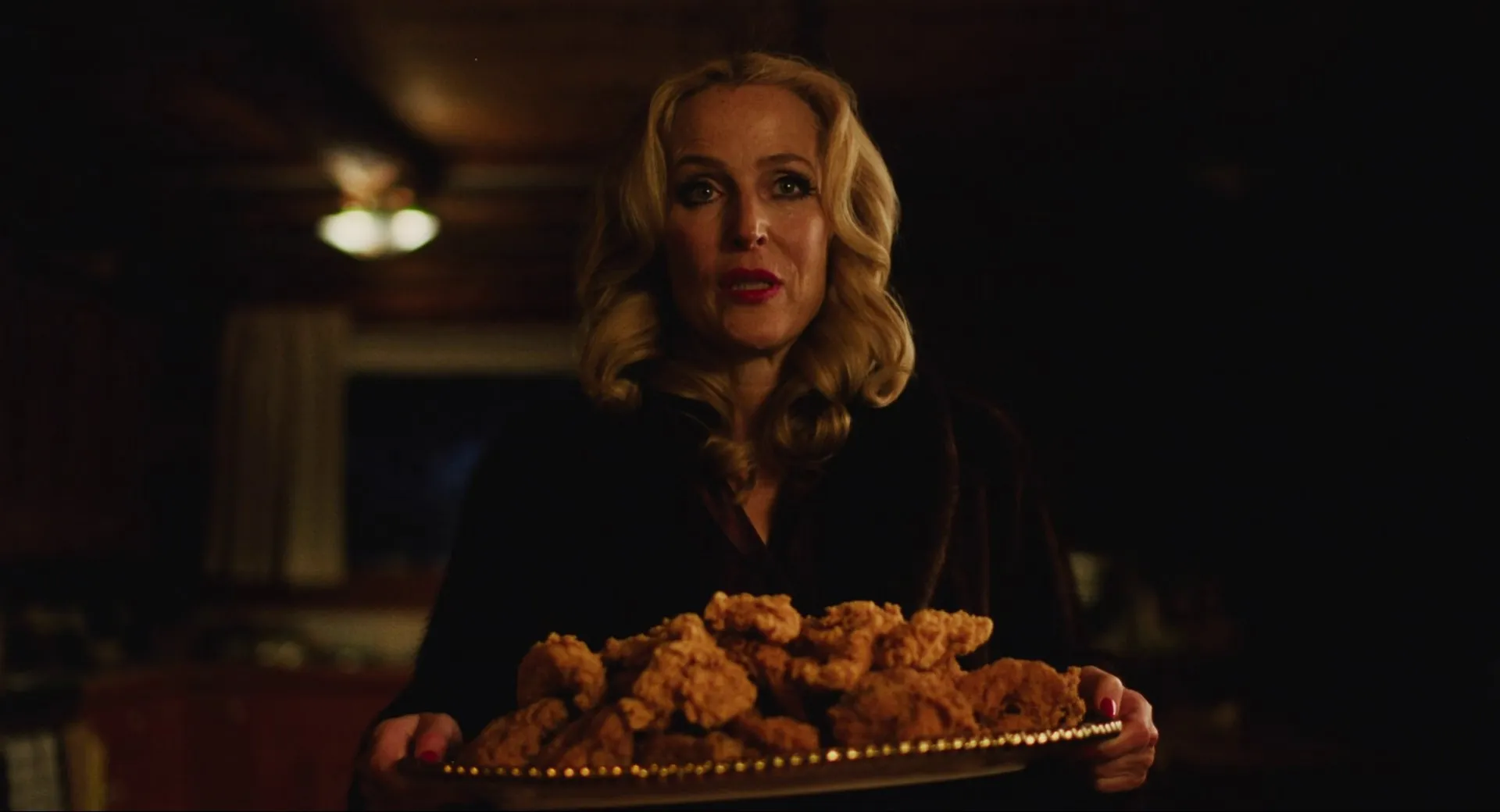
In Teenage Sex and Death at Camp Miasma (Jane Schoenbrun, 2026), Kris (Hannah Einbinder) and Billy (Gillian Anderson) bury themselves in junk food. From the beginning, when Kris arrives at the hotel and puts the DVD on – all glory to the old DVD menus – she is surrounded by colorful packs of candy. There is a decadent insert of one of these packs being mixed into the bucket of popcorn. Glamorous Gillian Anderson serves fast-food fried chicken and children’s cereal from Costco, and at the end, after the “killing,” when both of them are at the convenience store, Kris talks about “the golden age of gummies.”
Teenage Sex and Death at Camp Miasma (2026), dir. Jane Schoenbrun
All these colorful packs caught my eye. For me, having grown up on fruit and beans in a tropical landscape, this is all very artificial. At the same time, having visited the States recently and watched my American partner eat their gummies – and having myself surrendered to the artificially flavored paradise – I understand why this must feel so intimate for them. The artificial here is less so, because it captures a familiar experience. Thinking about The Golden Age of Gummies brought me to some sort of revelation about Schoenbrun’s cinema: it’s all about when the artificial becomes natural to us, which is especially true for a new generation of filmmakers who grew up in front of screens. Once there were movies, tales of obsession and madness like Videodrome or Pulse, that served as cautionary tales to keep us from indulging in too much escape from reality. Right now, these screens have become our whole reality. No way out, we were eaten by the machine. That’s the context of the shared and somewhat playful psychosis of We’re All Going to the World’s Fair and I Saw the TV Glow, Schoenbrun’s previous films. It’s how we shape our sense of self now, how we find our chosen families and personal mythologies, for better or worse.
Teenage Sex and Death at Camp Miasma (2026), dir. Jane Schoenbrun
Old-school cinephilia knows a thing or two about living through images.
That’s the beauty, beyond the visual sapphic pleasures, of seeing Einbinder hand in hand with Anderson. We have here two generations of creative women representative of two moments in the industry: one wounded by carelessness and the other by hypervigilance, both making their way back to the body. There is a hierarchy of power, though, in that Kris is a little bit ridiculous, although relatable. Billy, the older generation, takes the lead and shows the way back. She knows how the unspoken fantasies of cinema history shaped our desires, and invites us to dwell on them. That’s what the movie is asking us to do: let go of our cultural studies papers and just feel it. Schoenbrun is looking back over their shoulder to see what they can learn, and that’s a wise, humble move.
Teenage Sex and Death at Camp Miasma (2026), dir. Jane Schoenbrun
Susan Sontag had already made the same demand as Camp Miasma when she declared herself to be Against Interpretation and pointed us toward an erotics of art. (I’m sorry, I know I’ve cited this text recently, but Susan is haunting me.) She wrote this in 1966, but it could have been yesterday:
“The old style of interpretation was insistent, but respectful; it erected another meaning on top of the literal one. The modern style of interpretation excavates, and as it excavates, destroys; it digs ‘behind’ the text, to find a sub-text which is the true one.”
She’s on fire, man:
“In some cultural contexts, interpretation is a liberating act. It is a means of revising, of transvaluing, of escaping the dead past. In other cultural contexts, it is reactionary, impertinent, cowardly, stifling.”
Are we being impertinent? Are we doing violence to our beloved obsession?
In order to push us out of the critical position, Camp Miasma’s strategy is to comically interpret itself into the ground. As Philippa Snow also noticed, it does the job so we don’t have to. It repeats the Sunset Boulevard reference twice. It calls their symbolic orgasm “Little Death.” Everything is very on the nose. That’s why, at the beginning, I didn’t think it was a movie that lived up to its own premise. It teaches you how to feel while still being a deeply intellectual movie, aimed at the select audience of intellectuals who can’t come. It takes us by the hand and bullies us until we find the way out. It’s a movie with a thesis, telling us it’s about “flesh and fluids,” and that “if it gets too real, you can always turn it off.” Well, no risk of getting too real in the middle of this sea of gummies. It looks at us in the dark with Gillian Anderson’s gleaming eyes, the shadows hiding her mouth in the magical way old Hollywood used to do, and says: “it’s only play.” (Hell yeah.) If we get deeply moved by that, it’s because we’re also trapped in our brains, just like Kris. A movie that only feels can’t get us out of there. We need someone who knows the maze well enough to get us out.
An actual anti-overthinking movie that lives by its premise, like Crash, for example, would never do that.
But then, there is the twist that makes the movie something actually new. It’s not only about “letting go,” but about how, paradoxically, in order to let go, we need to be a little up in our heads too. But differently. To desire, we need to be able to play. To picture ourselves running for our lives, half-naked in the forest, bouncing up and down. To be able to die a little. And cinema, like all types of art, teaches us how to play, how to be silly and fantasize. Forget about the Cartesian separation of body and mind, the film seems to say, because one leads to the other and back again. Do you realize how far we are from Laura Mulvey and her statement about the inherent violence of visual pleasure in cinema? To end the rule of the male gaze, she called for a cinema that “destroys the satisfaction, pleasure and privilege of the ‘invisible guest,’ and highlights how film has depended on voyeuristic active/passive mechanisms.” Camp Miasma works as an answer to Mulvey, saying no, pleasure in cinema is there for us too. Here’s how.