
‘The Last Photograph’ Should be Zack Snyder's Last Movie
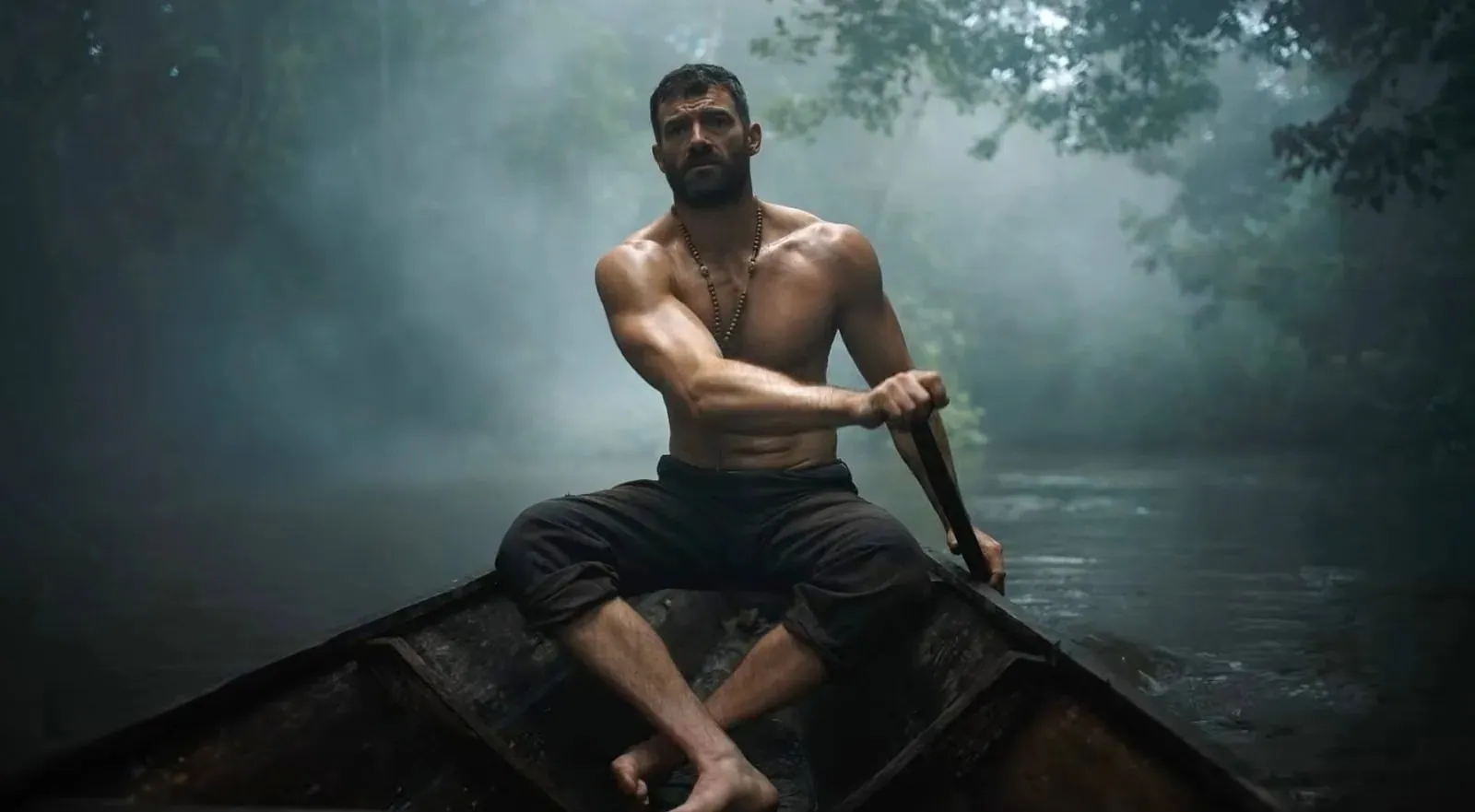
Zack Snyder's passion project is a slog of a revenge thriller that plays to his absolute worst instincts as a filmmaker.
About midway through The Last Photograph, Ethan Black makes a sandwich. Zack Snyder, who shot the film himself, gives the bread, the knife, and the assembly the kind of reverent, slowed-down treatment he once gave Spartans and Kryptonians, and the whole thing plays as a Hans Zimmer-scored montage, solemn and heavy with a meaning it never gets around to naming. I’m not exaggerating any part of that description. A man builds lunch, and the camera treats it like the raising of the flag at Iwo Jima.
That sandwich is the film. It’s also the clearest explanation I can offer for why The Last Photograph, a last-minute addition to the Toronto International Film Festival, showed up still looking for a U.S. distributor. The pre-festival chatter blamed the violence, and the film is violent, relentlessly so. But violence sells. Studios have passed on this one so far because it’s outright, offensively bad. Show it to me cold, tell me it’s a parody of a Zack Snyder movie, and I’d believe you without hesitation. Every hallmark is present and cranked to eleven: gratuitous slow motion, sweeping vistas, men who look plucked from cologne commercials, and women whose bodies are in the frame and whose characters are not.
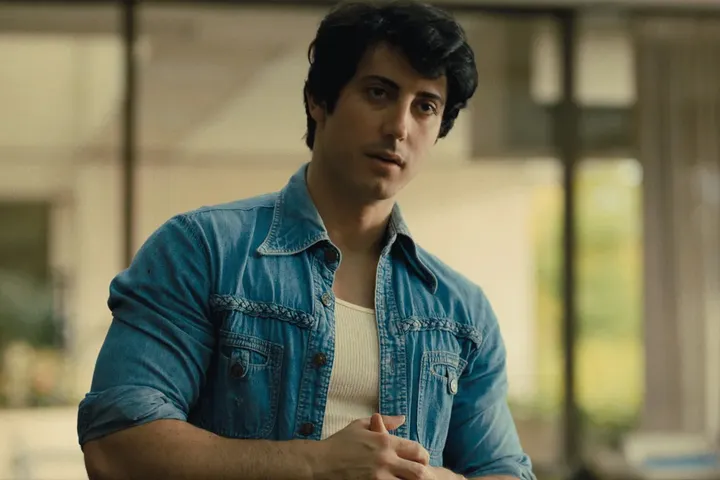
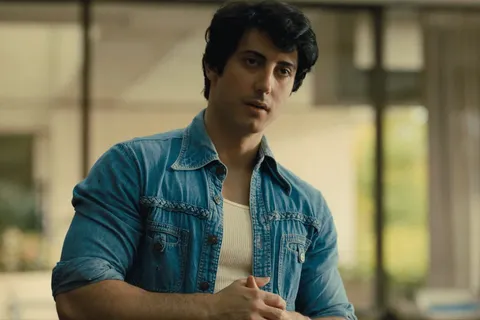
Stuart Martin, in the lead, looks like an AI de-aged Hugh Jackman, and that’s where the similarities end. He plays a man named Ethan Black (yes, really), who sees a photo of his wife at the exact moment she was murdered in the newspaper[?!]. Black takes a break from slaughtering sheep to track down the photographer behind the photo. He finds Joe Wallace (Fra Fee) in a strip club, offers him $10,000 to come along and help rescue his niece and nephew. The two Abercrombie models then hit the road (or river) and begin their Heart of Darkness journey.
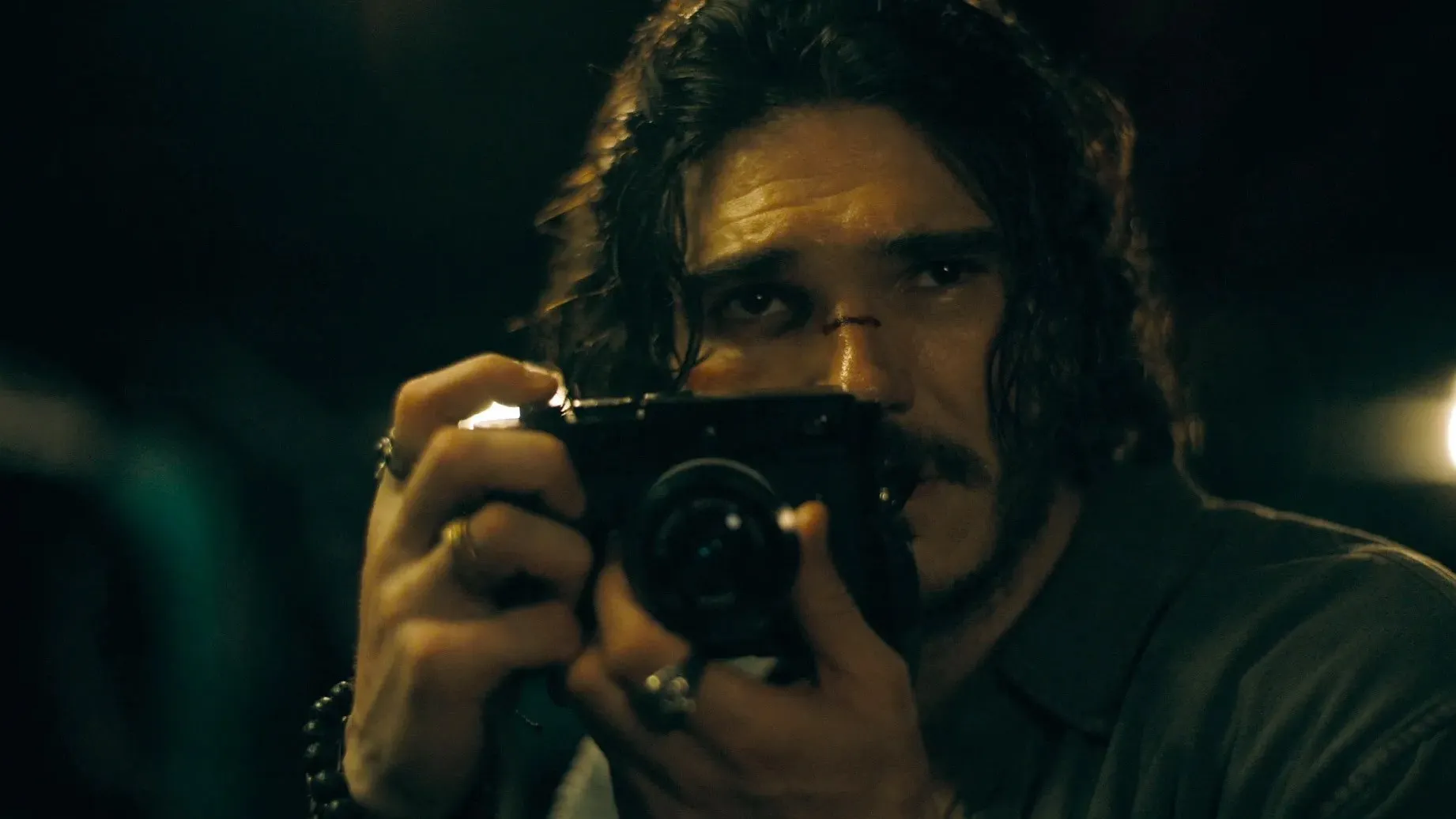
The war photographer at work, in The Last Photograph (2026)
Snyder has been pitching this as his Apocalypse Now, and has described the project as “a meditation of life and death” built out of trials from his own life. What he’s put on screen is closer to a gas-station-DVD Taken knockoff from Bulgaria, the kind of thing that barely registers as a movie while you’re watching it. The gap between the pitch and the product is the most interesting thing about The Last Photograph, because it tells you exactly what Snyder thinks arthouse cinema is. He thinks it’s genre with the lights turned down and the frame rate turned down further. This is what a dumb high school jock imagines an arthouse film to be: the same muscles, guns, and explosions, only sadder and slower, with landscapes.
Snyder has never been a director of actors so much as a director of bodies, and The Last Photograph strips away the superhero costumes and the sci-fi production design that used to disguise this. What’s left is the bodies, and we get plenty of them. Both male leads spend long stretches shirtless, showing off frames that look steroid-injected, and the female nudity arrives on schedule. It peaks in a scene I need to be very clear isn’t a joke: Ethan strips his dead wife’s body completely nude in order to break down and sob over it. Snyder stages this as the emotional center of the film. He cannot conceive of grief that does not involve undressing a woman.
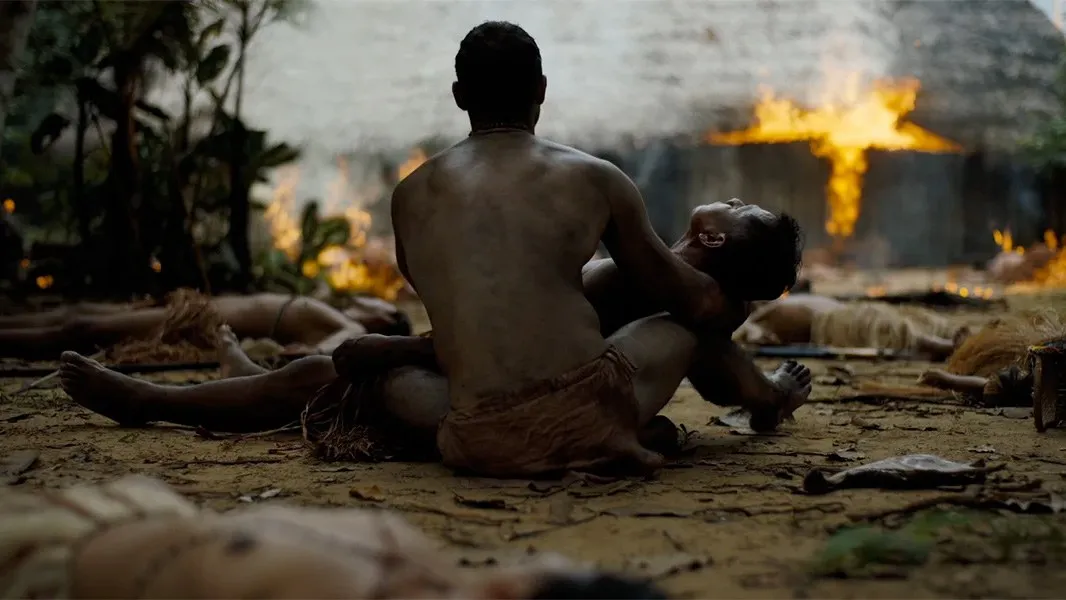
Snyder shoots the aftermath the way he shoots everything else, in The Last Photograph (2026)
Which brings me back to the sandwich, because that was the moment I finally understood why Snyder’s films attract the audience they attract. Zack Snyder is a boy who never grew up. Not in the Michael Bay mode, where the immaturity is bleach-blond, sun-damaged, and at least having a good time. Snyder’s arrested development is joyless. Peel the layers off the Snyder onion and you find a 13-year-old who likes big muscles, guns, and explosions, and who believes that slowing something down is the same as making it mean something. The Last Photograph is, quite literally, a picture of boobs, and it wants credit for being a picture of grief.
If any of this were delivered with a style other than dark, brooding, and slow, you could excuse it as an excessive genre exercise, the kind of movie that at least knows what it is. The unforgivable part is that it’s boring. There’s no substance and no reason to stay in your seat through a runtime that clocked in around two hours and felt like four. I watched this in a room packed with what looked like Snyder’s core constituency, the people who signed petitions for the Snyder cut, and there were multiple walkouts. Several more stayed and checked their phones, openly, for long stretches. When you’ve lost the Snyder bros, you’ve lost.
The Last Photograph did not screen for press before its premiere (always a sign of confidence), and maybe should not screen for anyone, ever again.