
Ari Aster’s ‘Eddington’ Wants to Make You Hurt
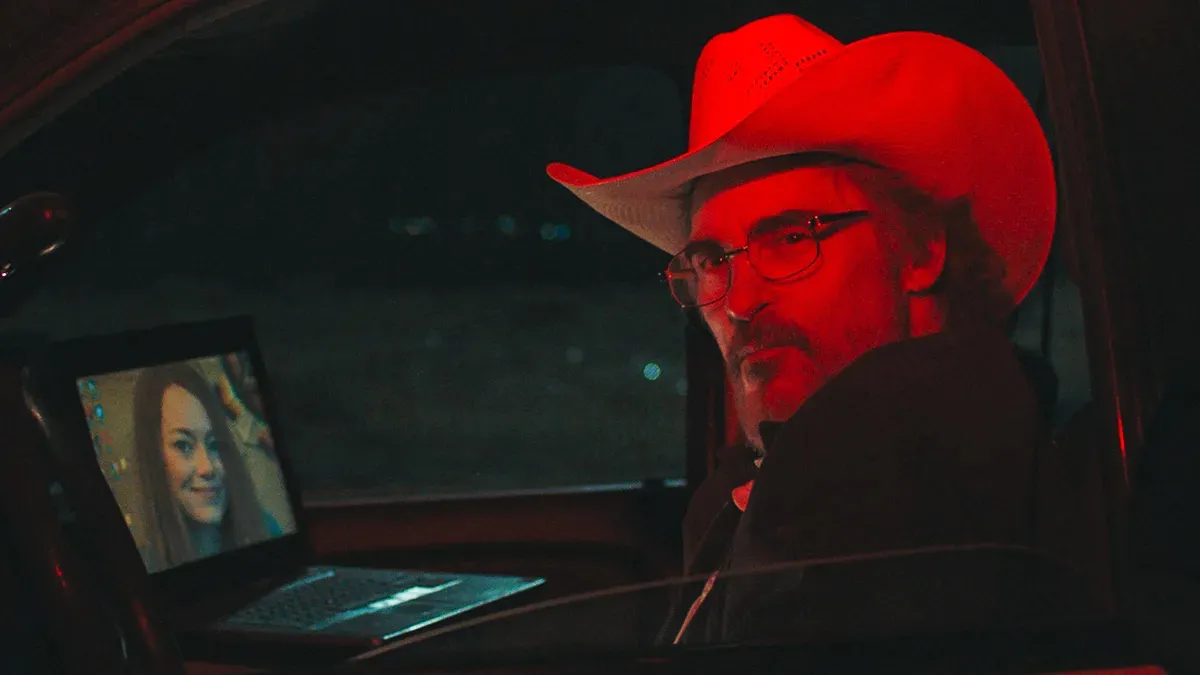
A COVID-era western where the phone on the dashboard does the thinking. Aster's cruelest film, and the one most likely to be reclaimed.
Ari Aster’s characters make terrible decisions and then drown in the shallow graves they’ve dug for themselves. The horror (and comedy) comes from watching them sink. This time he subs demons and cults for the too-online brain rot of COVID-era America: an iPhone mounted to a dashboard, the buzzing of a drone overhead, the looming AI data center on the hill. A country infected by the algorithmic silos of its own making, faux cowboys firing assault rifles into the dark.
The town is Eddington, New Mexico. It’s May 2020. Ted Garcia (Pedro Pascal), the mayor, enforces the state mask mandate and keeps a data center deal moving on the side. Joe Cross (Joaquin Phoenix), the sheriff, won’t wear one, gets publicly embarrassed about it, and decides more or less on the spot to run against him. That’s the whole engine. A man with hurt feelings and a badge, handed an election to put them in.
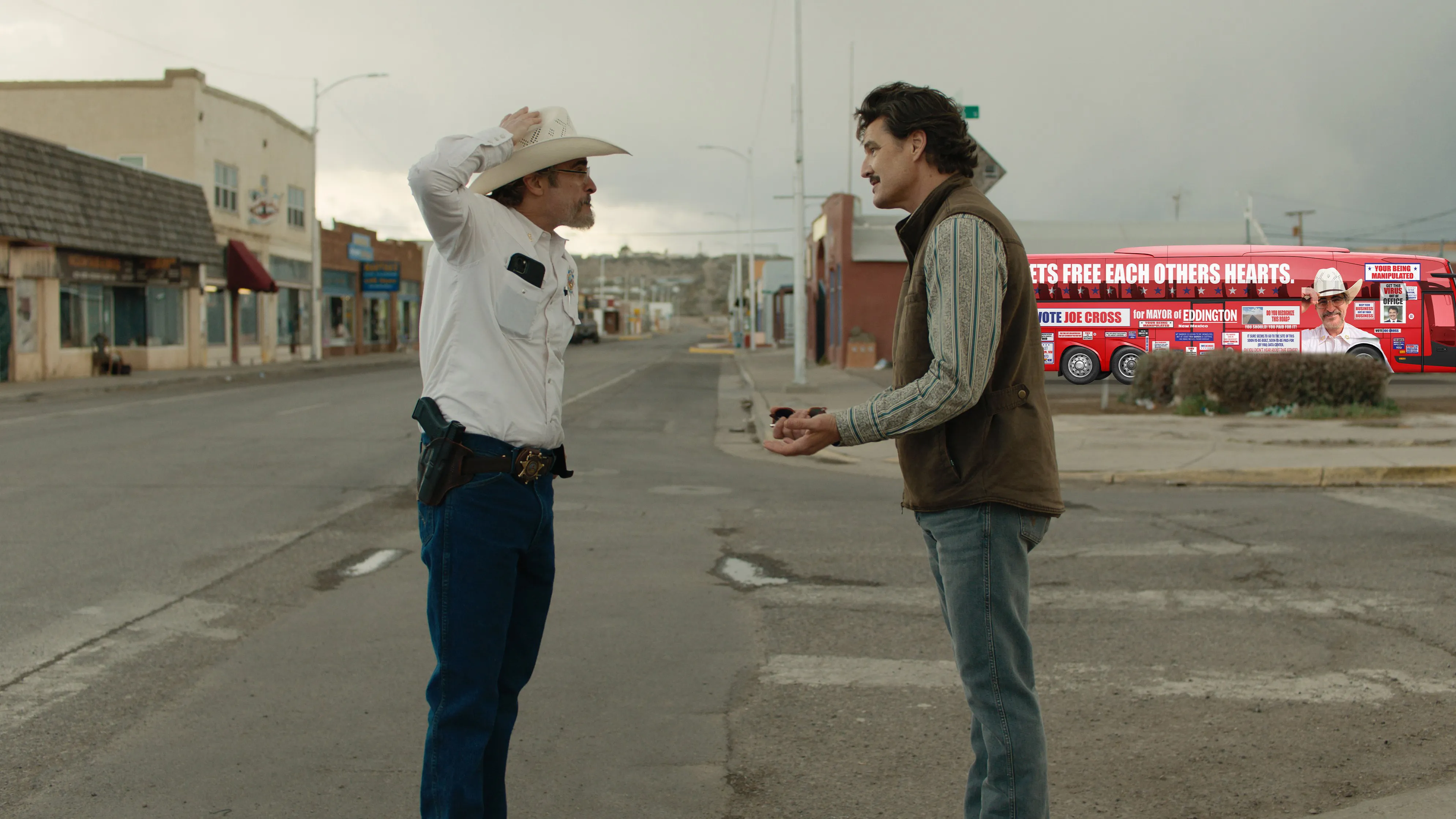
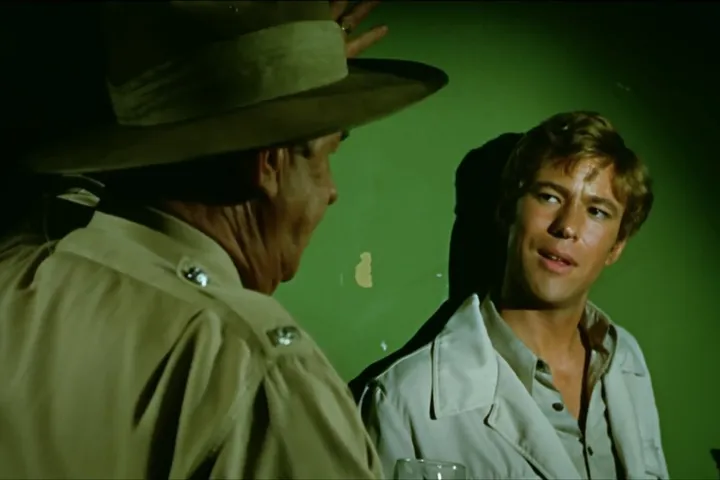
Joaquin Phoenix and Pedro Pascal in Eddington (2025)
Every Aster film runs on the same cruelty. Someone makes a bad call in the first half hour and the next two hours tighten around it while the director stands just outside the frame, enjoying himself. Hereditary did it to a family, Midsommar to a relationship, Beau Is Afraid to a man who couldn’t get out of his own apartment. The part of this that keeps getting missed is that they’re comedies. Pitch black, frequently unbearable, but comedies, and the pleasure Aster takes in the sinking is the joke. Eddington is the funniest of the four and also the meanest, which in his filmography is a real accomplishment.
The machinery is what changed. No inherited demon, no flower crowns, no surrealist apartment. The dread here comes from an elevated version of reality, and the elevation is maybe four degrees. That’s the uncomfortable part. Aster has taken the least metabolized period in recent American life and staged it as a western, in the sun, with everyone’s phone out. It’s 2025 and pandemic-era tension in this country hasn’t cooled at all, which is presumably why the film split the reviews down the middle and got a C+ from audiences. Watching it is like being handed back a year you specifically agreed to stop discussing.
An American director had to make this movie, for practical reasons. The specific texture of that spring, the mandates and the counter-mandates, the protest footage everybody watched on a four-inch screen and then argued about at dinner, the particular register of the guy who starts every sentence with “I’m just asking questions,” wouldn’t survive translation to someone who observed it from outside. Aster lived through it here, with us, and the film has the accuracy of a grudge.
Joe Cross deserves everything he gets, and this is what keeps the movie from being a shrug at everybody’s expense. Phoenix plays him as a man whose entire political program is that he was made to feel small in front of people he knows. The phone clamped to the dashboard is the whole characterization. He talks into it, he takes his positions from it, and he repeats what it feeds him back to the town an hour later as though he arrived at it himself. Nothing gets into that truck from outside. When he finally says the thing about Ted that he can’t take back, it doesn’t play as strategy or even as a lie so much as a man reciting something the loop handed him. Aster doesn’t build a case for him and he doesn’t build one against him either. He just lets the loop run.
The film is beautiful, and beautiful in a way that keeps insisting on how bad this is going to get. Darius Khondji shot it and Lucian Johnston cut it, both back from Beau Is Afraid, and the two of them have found a register I haven’t seen from Aster before: daylight pushed almost to white, and then a black at night that is genuinely black, no ambient wash, no courtesy fill so you can find the actors. The bleakness is right there in the image before a single line of dialogue confirms it. Khondji has described the approach as pushing toward high contrast, bright to the edge of overexposure by day and very dark at night. It works because that black is a fact about the town. There’s nothing out there. When the shooting starts in it, you can’t see much, and neither can they.
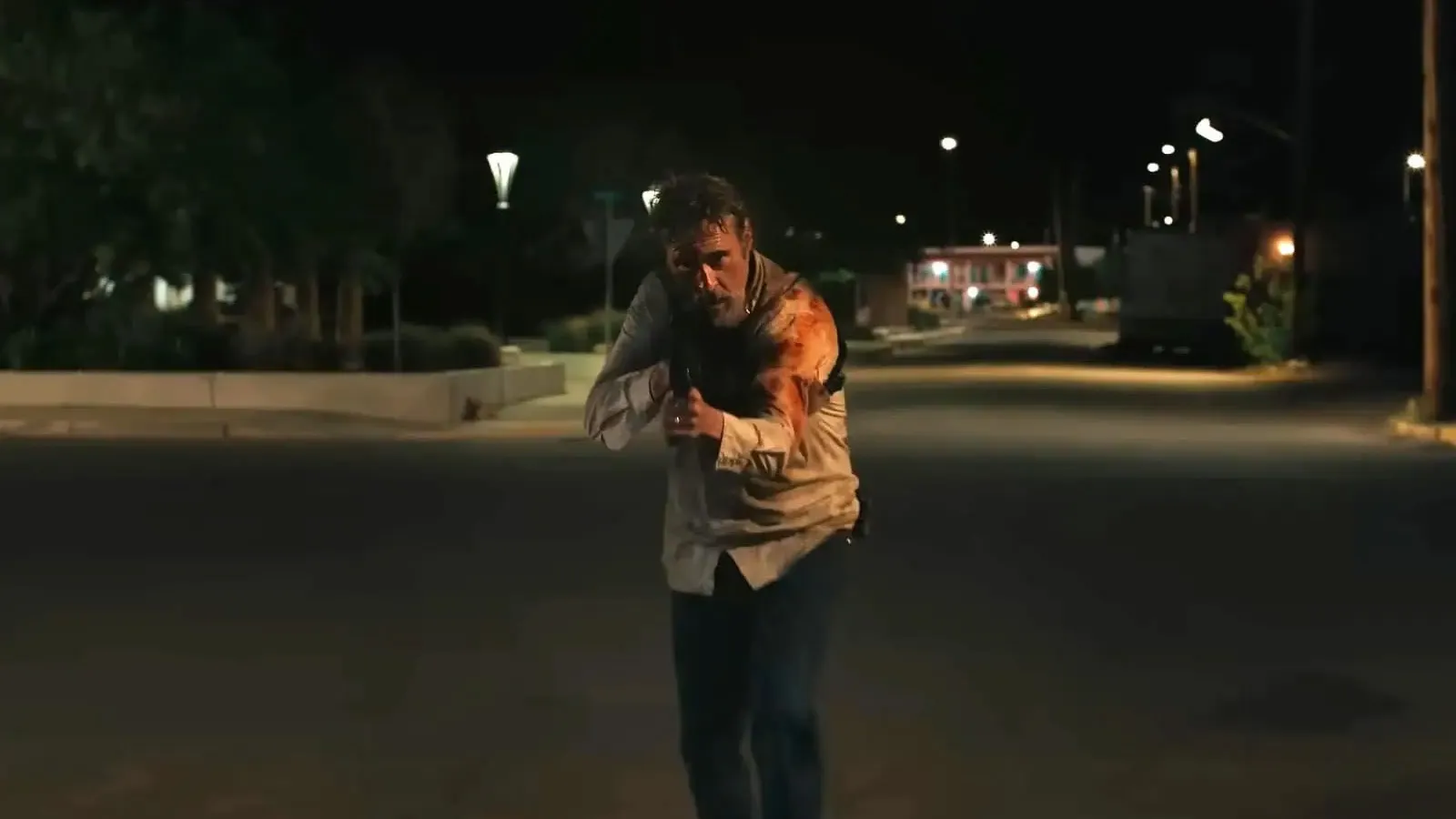
Phoenix in the film’s very dark night, where Darius Khondji refuses to give you a courtesy fill, in Eddington (2025)
Underneath all of this is a furious movie. Angry at the state of the country, at what that year did to people, at how efficiently it split families that had been fine two months earlier. Talking to Variety about the ending, Aster described the town as a bunch of boring people going at each other while all of them are “subject to the same forces and the same big power that is working on them,” and pointed out that plenty of viewers read the data center as the film’s real villain. That’s the key to the whole thing. While everyone in Eddington is at each other’s throats about masks and protest videos and who said what on Facebook, the actual transfer of power happens on a ridge outside of town, quietly, with a permit. He’s holding our heads down in it. He wants us to look.
The performances are uniformly excellent, which for a cast this size isn’t nothing. Pascal’s Ted Garcia is a spineless liberal functionary of a very recognizable type, agreeable to the point of vacancy, and Pascal keeps finding the small physical accommodations such a man makes to avoid a confrontation. He’s Joe’s polar opposite and he gets his own reckoning, which the film doesn’t spare him. Austin Butler turns up as Vernon Jefferson Peak, a guru whose interest in helping people runs exactly as deep as his interest in monetizing them, and Butler plays him with the total calm of someone who has never once been contradicted in a room. Emma Stone, as Joe’s wife Louise, is doing something harder and quieter: a woman who has been failed enough times that she will now take guidance from literally any source that offers it, and who is therefore the most available person in the movie. Stone has had an extraordinary decade and this belongs on the list.
The last stretch goes off the rails. Aster told Filmmaker that the film “goes off the rails in the last 30” minutes and that this is something he likes, and I’m inclined to agree with him, though I’ll leave the shape of it alone here. What I will say is that the film earns the right to spend its final act watching Joe Cross receive precisely the life he built, and that the earning happens hours before you notice it has.
The case against the film writes itself. The tone lurches between black comedy, social commentary and genre pastiche without ever settling, and it drops the summer of 2020, George Floyd’s murder included, into a register plenty of people will find flippant. Fair enough. It’s also a description of what Aster is doing on purpose. This is my favorite thing he’s made, and the reason it’s getting punished is that the shallow grave belongs to all of us. He hands the shovel around.