


‘The Vanishing’ is Evil and Essential
The most famous abduction in Dutch cinema happens in flat midday light, in full view, with nothing hidden — and it still makes you sign the contract.
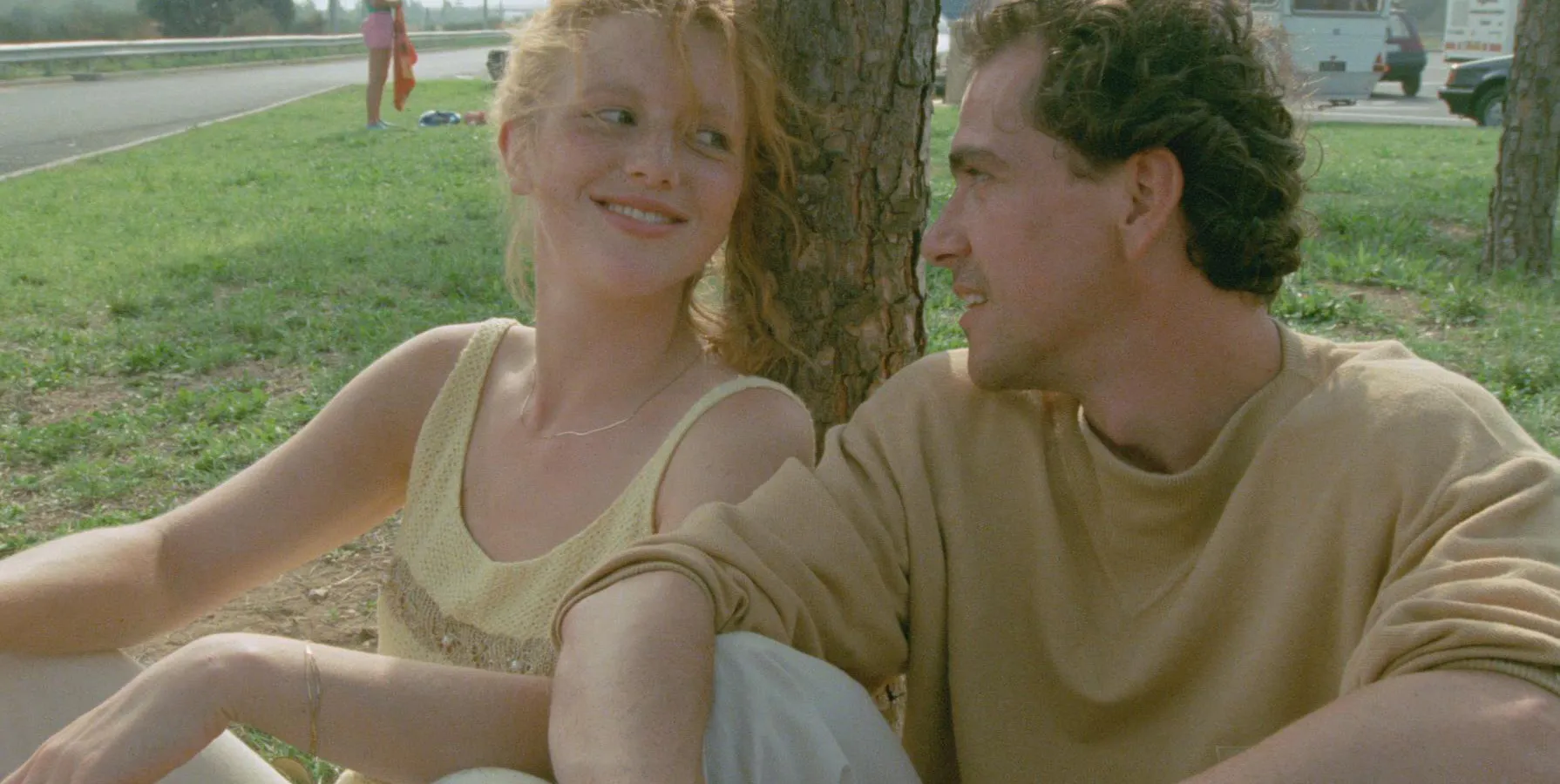
The gas station is lit like a parking lot at noon, because that is what it is. Toni Kuhn shoots the most famous abduction in Dutch cinema in daylight so flat and so available that it hides nothing, and that flatness is the whole trick. Horror movies teach you to read shadow as threat. The Vanishing removes the shadow and leaves you holding a skill you cannot use. Saskia walks into a building you can see all four sides of and does not come out. Everything is visible. That is precisely why it feels impossible.
George Sluizer spent the 1960s making documentaries, including a run of National Geographic specials with titles like Yankee Sails Across Europe and Siberia: The Lost Horizon. It shows. His 1988 adaptation of Tim Krabbé’s novel The Golden Egg, which the two of them wrote together, treats a kidnapping the way a nonfiction cameraman treats weather: as a thing that occurred, in ordinary light, at a specific hour, whether or not anyone was watching properly. Most thrillers are directed. This one is observed.
That distinction produces the film’s real subject, which is not the crime but the audience’s appetite for it. The Vanishing is horror by contract. You sit down, you hit play, you watch a Dutch couple bicker their way through France, and somewhere around the twenty-minute mark you understand that the movie will not meet you halfway, will not startle you, will not do you the courtesy of a musical cue. It sits still and waits. Then it lets you walk into the snare, because you need to know how the story ends and it knows you need to know.
Rex (Gene Bervoets) and Saskia (Johanna ter Steege) look like people you have watched argue about directions in a rest stop parking lot. Ter Steege in particular carries Saskia’s fear of abandonment as something the woman has been hauling around for years rather than something a screenwriter handed her in scene four. The performances are loose in a way that recalls European road pictures of the previous decade, where the camera hangs back and lets a relationship reveal itself through logistics. They are annoying to each other. They are also clearly in love. That takes about eleven minutes to establish and it is the only capital the film ever spends.
When Saskia steps inside the station, Sluizer declines every available shot. No sinister close-up of a door. No figure loitering at the edge of frame. Instead he holds wide, and holds it too long, and shows Rex first alone in the crowd and then alone outside the crowd. Henny Vrienten’s score more or less evaporates. What you get is car engines, footsteps, the ambient nothing of a highway. Another director punctuates the moment. Sluizer suffocates it.
The panic in that sequence comes entirely from the withholding, and it does something aggressive to the viewer. You start to feel complicit, like a detective who walked past the obvious clue. The film then makes its position clear. There was no clue. You were not being tested. You were being watched.
A man who returns his library books on time
Bernard-Pierre Donnadieu plays Raymond Lemorne with the calm, faintly tedious politeness of a man who returns his library books on time, and the film depends on that choice so heavily that it is hard to imagine any other actor surviving it. Donnadieu gives Raymond the physical bearing of a high school math teacher and the interior life of a scientist trying to reproduce a result. He is not menacing. He is thorough.
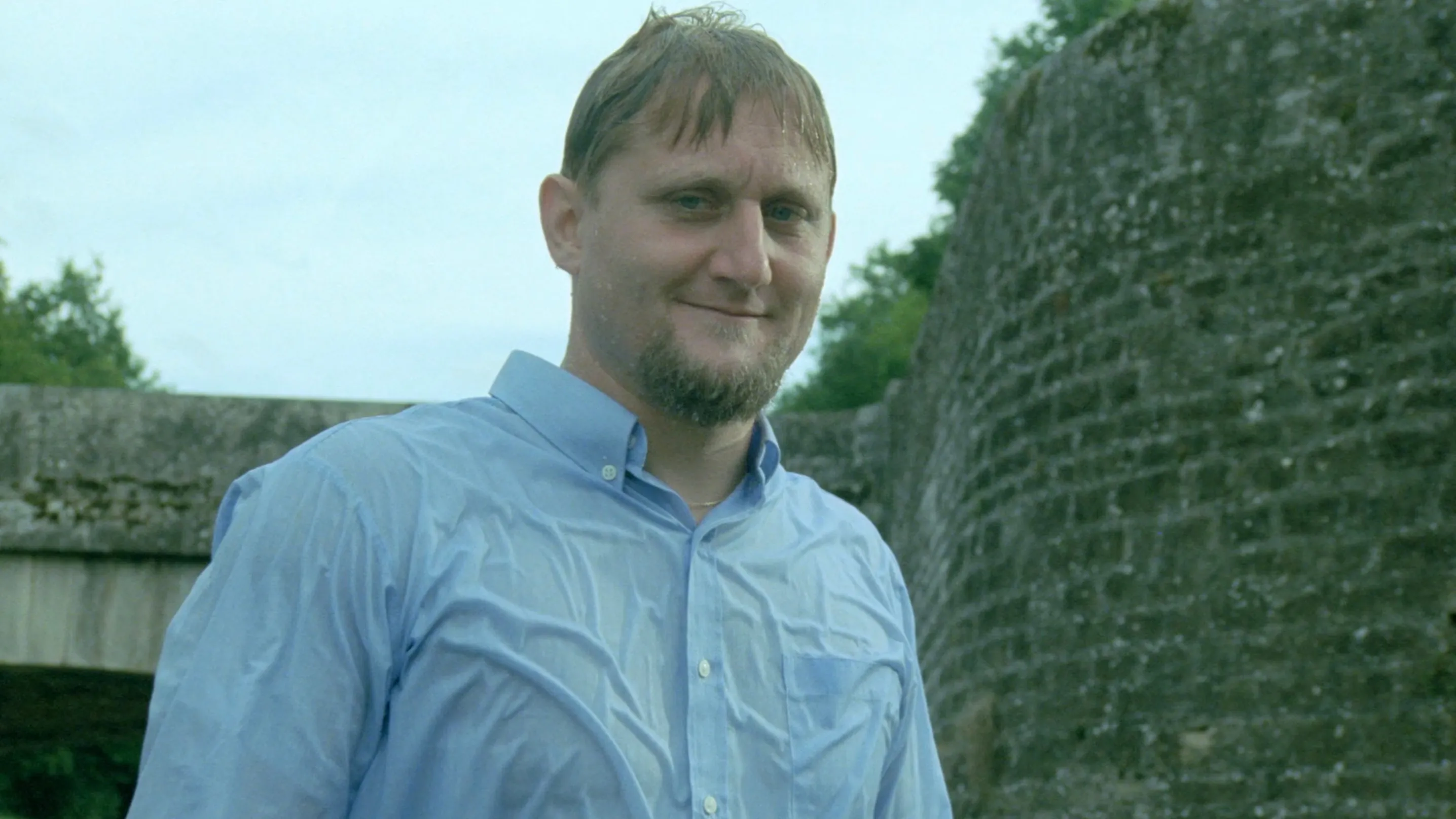
Bernard-Pierre Donnadieu as Raymond Lemorne, freshly and inconveniently heroic, in The Vanishing (1988)
Watch him test the chloroform. The scene plays like someone trying out a marinade, and there is a real streak of Jacques Tati in it, deadpan physical business warped a few degrees into the grotesque. Domestic space becomes a laboratory. He measures distances in his own driveway. He rehearses a fake injury in the mirror. He has his daughters scream in the country house so he can gauge how well the walls hold sound. We are watching a man prepare for an abduction the way other men prepare for a camping trip, and the film refuses to editorialize about any of it. It looks like a workplace training video for sociopathy.
Stanley Kubrick reportedly called this the most terrifying film he had seen, and by several accounts he contacted Sluizer specifically to talk about how it was cut. That tracks. Kubrick built The Shining out of process, out of watching Jack type and wander corridors and throw a ball against a wall, on the theory that horror leaks out of a person performing a task with too much focus and too little feeling. Sluizer arrives at the same conclusion from the documentary side rather than the maximalist side. Nothing in the filmmaking tries to persuade you that something awful is underway. The ordinariness is the argument.
Structured like an autopsy
The film is cut like a post-mortem. Sluizer edited it himself with Lin Friedman, and the nonlinear flashbacks are not there to withhold information or misdirect. They are there so you can feel memory infecting Rex’s days, arriving unbidden in the middle of a meal or a conversation. Scenes are clipped and unadorned. There are almost no lingering close-ups and no monologues at all. The precision recalls the forensic looking of Antonioni’s Blow-Up, except that where Antonioni dissolves into abstraction, Sluizer stays coldly literal. Every cut walks you closer to the only ending the story can have.
The pacing is hypnotic in a way that has aged strangely well. Conversations run long and unscored. The sound design is naturalistic enough that it barely registers until you notice how much tension you have manufactured on the film’s behalf. Fincher’s clinical patience is in here, and so is Haneke’s moral bleakness, and neither gets announced. Five years later Sluizer remade it in English for Fox with Jeff Bridges and Kiefer Sutherland, relocated to the Pacific Northwest, and lost almost every one of these instincts in transit. Same director, same story, new screenwriter, and a studio that wanted the moment punctuated. It died on the table.
By the time Raymond makes his offer, Rex has become the sort of man you notice standing too long in front of a missing persons poster. Bervoets plays him as someone whose face has forgotten how to produce any expression other than torment, which is a harder performance than it sounds and which a whole generation of Scandinavian noir leads have since borrowed from. His life is a stalled engine and he has stopped pretending otherwise.
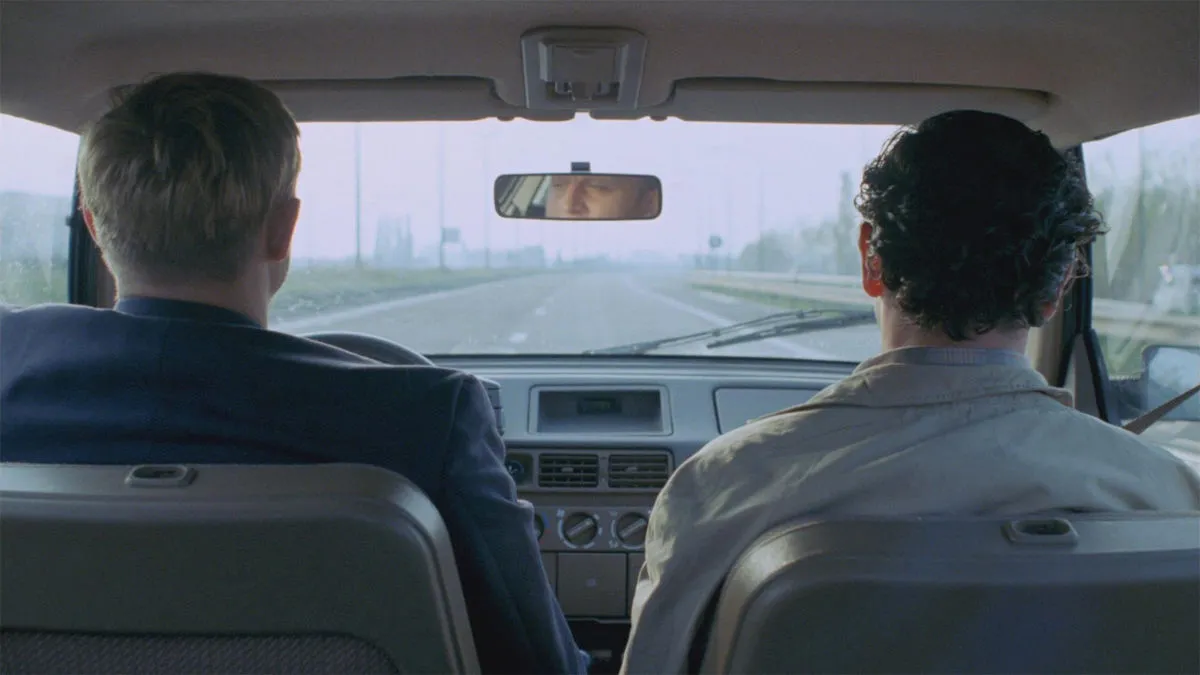
Two different equipment settings, sharing a car, in The Vanishing (1988)
The visual grammar keeps the two men apart. Rex is jittery, unshaved, sloppy, and shot handheld more often, as though the camera cannot settle in his presence. Raymond is steady in frame, centered, composed. The camera treats him with exactly the dispassionate distance he extends to his own morality. Neither man is ever framed as the other’s opposite. They are framed as two different equipment settings.
The cruelty is the choice
When Raymond tells Rex he will have to share the exact same experience, the film converts into a philosophical puzzle wearing the clothes of a road movie. Rex gets the rules. He gets the price. He understands where the door leads. He goes through it.
That is the cruelty here, and it has nothing to do with what happens to him. He chooses it. And so do you, which is why the thing stays with you like a bruise. You know what Raymond is. You saw the trap being built, in daylight, with a tape measure. You watched the narrative point itself at the dark and you kept going, because you wanted the information, the answer, the closure. You wanted to see what happened in that hole even knowing that once you see it you cannot stop seeing it.
The film’s ancestors are Psycho and Vertigo and, further back, “The Lady, or the Tiger?” Its descendants are everywhere: Villeneuve’s Prisoners, the domestic dread of Lost Highway, the missing-girl fixations of Zodiac and Memories of Murder. Every thriller where the answer turns out to be worse than the mystery owes Sluizer something. None of them reproduce this particular sensation, which is that the movie has been quietly studying you the entire time you thought you were studying it.
The Vanishing is a mirror, and a mean one. It puts the distance between a man like Raymond and a man like Rex at about the width of one question, then asks whether the truth is worth what it costs. The ending answers yes and absolutely not in the same gesture. Thirty-eight years on, nobody has improved on it, including the man who made it twice.

Film obsessive, photographer, and former Blockbuster Video clerk, currently living out every creative's dream of working in digital marketing.